Intrepid journeys in social studies curriculum development: Critical reflections and insights of a New Zealand educator
Tanya Samu
https://doi.org/10.18296/cm.0017
Abstract
This article describes and discusses a self-inquiry into curriculum practice on the part of a New Zealand-based social studies educator. The approach used was adapted from Barber’s Gestalt approach to holistic inquiry. It is a qualitative approach in which the self-aware practitioner-researcher and his (or her) interactions with others is at the centre of the inquiry. It prioritises the co-construction of respectful relationships. Self-awareness and reflexivity are important processes. The main settings for study were national education systems in the Pacific and central Asia, in which the practitioner-researcher carried out the role of consultant for national curriculum development in social studies (for primary and junior secondary schooling) and social sciences (for senior secondary). This self-inquiry into practice led to critical reflections about the extent to which the practitioner-researcher’s experiences with New Zealand social studies shaped efforts as an international social studies curriculum consultant. Several products and critical insights emerged from this study, which may have potential value for contemporary developments in social studies education in New Zealand and elsewhere.
Introduction
This article presents an inquiry into my practice as a social studies consultant—more specifically, as a developer, implementer and teacher educator in national social studies (for primary and junior secondary) and social sciences (for senior secondary) curricula for developing nations. The somewhat ad hoc professional and academic experiences that qualified me for such work took place largely within Aotearoa New Zealand. With hindsight, I am able to organise these formative experiences in curriculum development into two distinct stages.
Stage 1: Developing expertise in curriculum implementation
The setting for the first stage is Aotearoa New Zealand and spans the mid to late 1990s. I was teaching social studies and geography in a west Auckland secondary school. I took advantage of every opportunity offered by Auckland-based teacher advisory services and the social studies teachers’ association to strengthen my skills in planning and teaching the subject. As the head of department, I was responsible for ensuring that the school-based social studies programme aligned with the national statement at that time, Social Studies Syllabus Guidelines: Forms 1–4 (Department of Education, 1977). Teachers often referred to it informally as “the Orange book”. It was broad, imprecise and outdated but at least we had Social Studies: Forms Three and Four (Ministry of Education, 1991) a comprehensive handbook to provide much-needed structure to guide implementation.
Several pivotal events at the national and individual levels took place concurrently. The social studies curriculum statement for primary (Department of Education, 1961) and the afore-mentioned Orange book for secondary schooling (two separate, unaligned documents) were replaced with one document as part of the major rehaul of the school curriculum that began in 1993 with The New Zealand Curriculum Framework (Ministry of Education). I was invited to be a member of one of the national reference groups for the draft social studies statement. I felt privileged to witness the shaping of the long-awaited social studies curriculum. Social Studies in the New Zealand Curriculum: Draft was released in 1994 for public and stakeholder feedback. This, however, turned out to be extremely polarised and contentious.
Soon after the Draft’s release, I accepted an invitation to co-write a commercially published social studies textbook series that would implement the Draft. Topics were set in the Pacific, one of the mandatory settings. I also began postgraduate study, and became enthralled with a master’s paper about the politics of curriculum development.
Meanwhile, at national level, the Ministry of Education convened a new writing team in 1996 to produce Social Studies in the New Zealand Curriculum: Revised Draft because the controversy over the Draft had been too great. Unfortunately the Revised Draft did not fare much better. The Ministry of Education determined that a third and final writing process was required in 1997, resulting in Social Studies in the New Zealand Curriculum. I decided to investigate these issues for my master’s thesis (Samu, 1998). In 1997, I moved into initial teacher education (ITE), with responsibilities that included developing and delivering an ITE social studies secondary education course for a university graduate diploma programme.
When these experiences are considered collectively, one could argue they represent unique opportunities for developing expertise in social studies curriculum review, critique, and implementation. In sum, Stage 1 involved getting to grips with a new national social studies curriculum; the development of a sociohistorical consciousness of the subject; learning to implement it, and sharing what I learned with prospective social studies teachers.
Stage 2: Developing expertise in (national) curriculum development
The most important formative experiences of the second stage of my development were set outside of Aotearoa New Zealand (namely Tonga and Samoa) between 2000 and 2004. In 2000 I was invited to review draft geography resources for use at junior levels in Tongan secondary schools. From 2002 to early 2004, I performed the roles of social sciences consultant and overall curriculum resources coordinator for Phase 2 of the Samoa Secondary Education Curriculum and Resources Project (SSECRP). The SSECRP was structured. Subject consultants had clear terms of reference to follow, and their work was organised into integrated work plans closely monitored and supported by project management. This was, in effect, on-the-job training.
When considered collectively, these formative learning experiences involved the following: curriculum writing; curricula and textbook reviews; textbook and resource writing (including teacher handbooks); and capacity building workshops for lead teachers and Ministry officials in curriculum writing and resource development. In other words, the experiences of this second phase focused on national curriculum development and involved inservice teacher education in social studies curriculum development and design.
Since SSECRP, I have been involved periodically in similar work for ministries of education beyond New Zealand. From my home office in Auckland, I have carried out desk analyses of draft curricula, resources and teacher handbooks for Tokelau, Cook Islands, and the Solomon Islands. Projects that required in-country deployments include the Second Education Project (2008–2010) for the Ministry of Education and Science of the Kyrgyz Republic (or Kyrgyzstan) and a national school curriculum project (2011–2014) for the Republic of Nauru.
Who am I? Why am I?
However, it was not until I was well into the Kyrgyzstan project that I realised how New Zealand-centric I was in terms of my curriculum knowledge, experiences and hence expertise. I was a New Zealand educated, trained, experienced social sciences educator and curriculum developer—yet here I was, in a foreign nation, attempting to facilitate the development of national curricula that would reflect that nation’s aspirations (even vision) for its society and economy. I realised that I was doing this work through a strong, even subjective, New Zealand social studies lens. A number of questions arose from this epiphany: (a) How and why am I a New Zealand (rather than an international) social studies educator? (b) How and why has this shaped, even directed, my work in other nations? And (c) how has my perspective about social studies education in New Zealand been influenced by these intrepid journeys and voyages of discovery elsewhere?
These questions will be addressed by a retrospective analysis. The methodological framework that was used drew on broad elements of Barber’s Gestalt approach to holistic inquiry (2006). It was selected because of the need for a framework that could organise and guide critical reflection about both process and product. The approach, as developed and used in this study, will be described and discussed briefly before it is applied in the analysis that follows.
A Gestalt-influenced approach to inquiry
Reflecting on my practice has been an integral part of my personal philosophy of teaching and research for many years. I do it to examine issues that both intrigue and perplex. My espoused belief is that this will help me learn and grow professionally—and, as a consequence, my practice will improve. The overall purpose of my efforts is captured in this Maori proverb, which in English says:
Take away the heart of the flax bush and where will the komako sing?
Proclaim it to the land, proclaim it to the sea,
Ask me what is the greatest thing in the world, I will reply
It is people, it is people, it is people!1
It is important when I am in these various roles to place the people I work with at the forefront to privilege their views and their experiences. This is done by establishing inter-personal collaborative work relationships. I wanted to use an approach that reflected these beliefs and values. I drew on the core principles of Barber’s Gestalt approach (2006) which locates the self-aware practitioner-researcher and his (or her) interactions with others at the centre of the inquiry, ensuring the development of nurturing, respectful relationships. Self-awareness and reflexivity are important processes. In other words, this is research that involves doing less, and being more (Barber, 2006).
Barber first used this model to investigate “the facilitative relationship and processes of change” (2006, p. 92). It consists of four relational phases: orientation, identification, exploration, and resolution. In the orientation phase, “the practitioner-researcher and their clients/co-researchers meet, sketch an initial contract, orientate to each other’s world-view and begin to form a working alliance”. It is in the identification phase that they work together to identify problems and ways forward and “refine the contract and raise awareness of the purposes and tasks of the inquiry”. The exploration phase is where the practitioner-researcher and the client-coresearcher “implement the strategies … modify these in the light of feedback and decide future steps”. The fourth and final phase of resolution involves evaluation of outcomes, reviewing of any required follow-up and addressing other project requirements, “all the while working towards a positive ending of their relationship” (Barber, 2006, p. 92).
This self study was prompted by the aforementioned epiphany. I came across Barber’s work after the Kyrgyz project finished, and began to develop an analytical framework that could be applied both retrospectively (drawing on experiences from completed projects) and concurrently (ongoing experiences). In adapting and applying Barber’s model, the relationships with others in the field were not research partnerships—but they were certainly practitioner partnerships to be centred and examined.
Figure 1 illustrates how this model was adapted in terms of my roles as practitioner (in curriculum development) and researcher (of my own practice). With reference to the area of the diagram labelled C, each of three projects required an orientation into the new setting, particularly the respective ministries or departments of education; in-country counterparts; the education system; and (with the exception of Samoa where I was born and raised) the local geography, climate, and cultures. The identification phase involved determining the parameters or boundaries of my role within each national setting; the professional skills and needs of my counterparts; the levels of teacher knowledge and expertise; and being responsive to the unanticipated. The third phase involved exploring the most appropriate and effective strategies to achieve project outcomes and address unexpected issues and problems. The resolution phase involved justifying why certain outcomes were not achievable in the project time frame, and quality assurance of outcomes, such as peer review of the final draft curriculum. Please note that the sequence of rectangles in Area C of Figure 1 briefly explain the focus of each phase, while the arrows show the interactive nature between phases.
Application of the model involved reviewing my work journal, reports, and related correspondence for each project. As I organised experiences and pieced together timelines of events, I reflected on my role as practitioner. This constituted the analysis of the study and the enactment of my role as researcher. Note that unlike Barber’s approach, this study did not include co-researchers. The potpourri of possible factors (in addition to the Gestalt-influenced methodology) that influenced this role are identified in area A of Figure 1.
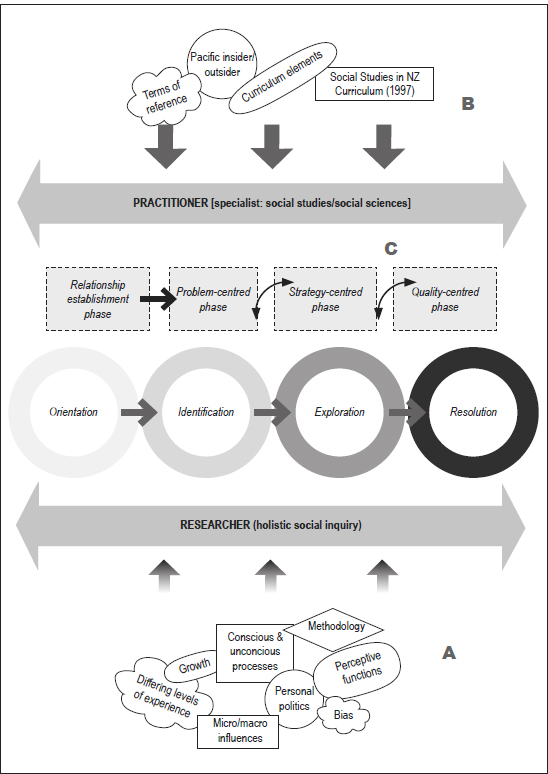
Figure 1. A framework for analysis and reflection
Analysis of practice
I identified three dominant features of my practice as a social studies and social sciences consultant. These are the terms of reference, my position as an insider or outsider, and what I term “the curriculum elements” (refer area B of Figure 1).
Terms of reference
Each of my contracts carried explicit statements about identifying professional needs and training lead teachers and educators. For example, the first terms of reference for the Kyrgyz contract involved “identify training needs … to ensure effective capacity to revise and modernise the existing curriculum, textbooks, learning materials on social studies” (Kyrgyz Contract, 2008). The seventh terms of reference of my Nauru contract stated that I was to “work with local counterparts to develop their capacity in the area of curriculum development and design” and “develop understanding of social science practices in schools” (Nauru Contract, 2011). For me, building the capacity and capability of lead teachers and educators (including those in the education ministry or department) became the most important outcome, more important than outcomes such as curriculum statements, teacher guides, textbooks, and other materials to support the implementation of the curriculum.
However, although the terms of reference for each contract were specific about requirements, the details of how to achieve them (with the exception of the Samoa project) lay with me. Figure 2 summarises the approach I took to enhance teacher capacity.
The workshops (as well as the teacher resources and exemplars) that I planned were organised around four themes. The programme began with an introduction to the nature of social studies. It then moved on to the purpose of curriculum and approaches to design. My intention was to develop a more critical consciousness of the subject, and encourage teachers to develop their own professional identities as social studies teachers. Once curriculum writing was at least in final draft form (the resolution phase) and confirmation of general acceptance (particularly the structure) was received from ministry officials, the focus turned to introducing teachers to approaches to teaching and learning in social studies. An influential resource, particularly for the Nauru project, was the New Zealand Ministry of Education-contracted study, Effective Pedagogies in the Social Sciences: Best Evidence Synthesis (Aitken & Sinnema, 2008). A concurrent activity with the Nauru project was strengthening teachers’ knowledge and therefore self-efficacy to teach particular topics.
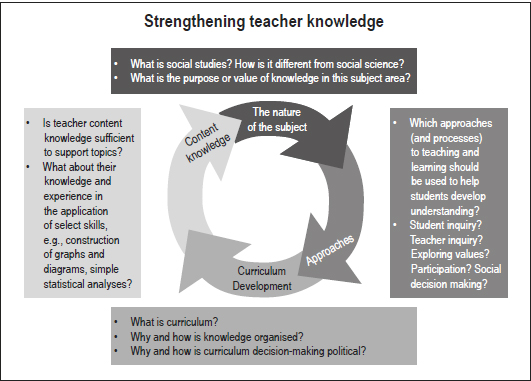
Figure 2. Social studies/social sciences teacher capacity building
Insider or outsider?
An important feature of establishing collegial relationships with my new colleagues in the orientation phase was my positioning as either an insider or an outsider. In the Kyrgyz project, for example, being an outsider was clear cut. While I had no prior knowledge or experience of Kyrgyzstan (a former Soviet republic) or its peoples, I soon learned (through my translator) that my specific outsider characteristics were positive for building new relationships because apparently no one held pre-conceived notions about me. I was on the younger end of the age spectrum of the consultancy team (40s rather than 60s); female (as were my counterparts), and I was not American (apparently older, Soviet-era teachers had trust issues relating to the United States). Coming from New Zealand, and being of Samoan heritage rendered me as an “exotic” foreigner. My Russian first name was an added bonus. I was often asked why my parents had named me Tanya—was it because my parents were familiar with classical Russian literature and the arts? I would simply smile and nod—too embarrassed to credit the more likely source of my name as being the James Bond movie To Russia With Love. I quickly became Tatiana to my new colleagues.
The Samoa and Nauru projects, however, were more complicated experiences. I was well aware that despite my Samoan cultural heritage, I am an “outsider” as an education consultant from New Zealand who periodically travels into the Pacific to work on curriculum and teacher development projects. Samoa was particularly problematic in that I was “local”—my parents and siblings live there. Concerned about the potential for negative perceptions, I decided to stay with my parents rather than at the hotel with other consultants. I wanted to avoid the possible perception that I thought of myself as being too good, too fia papalagi (“wanting to act like a white person”) to stay with my own family. It was seemed easier for local counterparts to accept my non-Samoan colleagues in the roles of curriculum consultant while I, on the other hand, had to work harder to earn acceptance and trust.
The tensions I needed to traverse in Nauru were different. Nauru is the first nation in Micronesia I have worked in. I struggled with learning simple Nauruan phrases (a language unrelated to Polynesian languages). Neither does it have a state-authorised orthography. Initially I found it difficult to establish a rapport with my Nauruan counterparts and teachers—there was polite non-committal reserve that took a long time to get past. I could not assume there was an automatic connection merely by being of Pacific heritage. To them, I was first and foremost one of many consultants, slightly different from others in that I was not Australian.
Further critical reflection led to the realisation that I was a problem to my own efforts of establishing authentic relationships. I realised I was carrying a very “Polycentric” attitude in that when analysing my initial impressions of Nauru schools, teachers, families, and even worship practices on Sundays, in my mind was a constant refrain of “Hmmm … over in Samoa/Tonga/Fiji, we do it this way.” I needed to accept I was not an expert on all things Pacific, and that a patronising attitude was not helpful. I needed to learn how to understand Nauru and its peoples as a Pacific nation on its own terms.
Curriculum elements
Tumultuous as it was, the process of producing the final statement Social Studies in the New Zealand Curriculum (Ministry of Education, 1997) meant that many of the issues that were raised previously about social studies as a subject, its nature, purpose, previous lack of structure and coherence, its relevancy, and its responsiveness to social change were robustly debated and to an extent, addressed (Barr, Graham, Hunter, Keown & McGee, 1997). When compared to the curricula statements that historically preceded it, it was indeed an exemplary statement. It soon become known informally to many social studies teachers as “the purple book”, because of the colour allocated to the social science learning area by the Ministry of Education. I drew on these formative learning experiences in New Zealand social studies (combining experiential learning, teaching, teacher education, and research) to identify what I consider to be essential “curriculum elements”. These were at first implicit but became more explicit as I developed my practice as a facilitator of national curriculum development in other nations. For me, the essential curriculum elements are: a sense of history or time; relevance; structure; and lastly, innovation.
Time
My approach to curriculum consultancy is influenced by what Popkewitz (1987, p. 1) described as a “historical consciousness” of social studies, and school curricula as a whole. A critical awareness of the politics of curriculum decision making (Apple, 1996) is another influential perspective. Therefore when I move into the identification phase of the work (refer Figure 1), I find out what went on before, what is currently in place, and teachers’ beliefs and attitudes about their subject area. Whether or not it was called social studies (Samoa), social science (Nauru primary schooling) or even working with separate social science subjects such as geography, history, and ethics, and charged with the responsibility of persuading teachers to integrate and replace with social studies (Kyrgyzstan), I piece together the recent history of social sciences curricula and teaching in that nation. Such an assessment is not a contractual requirement but I do it anyway. It is incredibly helpful to understanding, and even being sympathetic to, teachers’ reactions and responses to proposed change.
The element of time is inclusive of a future perspective. According to the purple book, “Perspectives on the future” was one of the five perspectives required for school social studies programmes (Ministry of Education, 1997, p. 22), and involved preparing students “to live in a rapidly changing world”. Such a perspective orientates learning towards understanding and preparing future citizens to help a nation’s efforts to to respond to and purposefully navigate globalisation. This was particularly important to Ministry of Education officials in Kyrgyzsta, a relatively young independent nation, while for educators in Nauru, a role in cultural revival and developing a stronger, grounded identity as Nauruan was an important future focus. I undertook a crash course in Nauru’s heart-wrenching history to appreciate why cultural revival and knowledge of their nation’s past and present was of such crucial importance to their aspirations for their future. Samoa has enjoyed a far more stable socioeconomic history since its independence in 1962. National development planning has been particularly strategic and sector-specific since the early 2000s, and so school curriculum change with material benefits (such as textbooks) for all schools was welcomed by teachers.
Structure
The developments in the 1990s of New Zealand social studies converted me to the importance of a curriculum’s underlying structure, particularly in relation to the professed desire by the nations I served for “student-centred” learning. Structures such as conceptual strands, achievement objectives, and indicators guide school-based decision making about what to teach. Structures enable teacher agency but within very clear parameters. It is these structures that enable the development of specific programmes of learning (including topics) that are not only responsive to students’ learning needs and interests but are more importantly (from a national development perspective), responsive to different contexts within that nation and changing concerns. The structures of national curriculum are like the skeleton of a fish, which are used to “flesh out” school-based social studies programmes for each level of learning.
In the identification phase of the Nauru project, educators shared their concern about schooling and what it means to be a Nauruan in terms of culture, geography, and especially history. The strategy I proposed (in the exploration phase) was a curriculum structure borrowed from the purple book’s “Essential Learning about New Zealand” or ELANZ (Ministry of Education, 1997, p. 23). Nauru lead teachers and I developed a similar list entitled “Nauru Studies”. The expectation of this curriculum structure is that over the course of 10 years of social studies education (from primary through to secondary), young Nauruans will have opportunities appropriate to their levels of learning, to develop valued knowledge of their nation. This curriculum structure provided reassurance that this was clearly articulated and mandatory.
The Samoa project involved the production of textbooks to support the national curriculum. These textbooks were distributed throughout Samoa: rural schools, urban schools; private schools, and church schools, at no cost to schools. Approximately 24,000 social studies textbooks to support Year 9, Year 10, and Year 11 social studies teaching were distributed in the resolution phase throughout the Samoan secondary school system. As the textbook writer for social studies, geography, and, in part, history, I recognised (identification phase) that students in rural schools would not be able to access research sources such as libraries, internet, and newspapers. The strategy ensured that the resources (and activities) included in the textbooks would provide teachers with a “one-stop shop”; for example, reproduced newspaper articles, summary charts from the last census, mock interviews, and news coverage of historical events. The intention was to facilitate the translation of the curriculum into effective practice.
Innovation
In New Zealand and other westernised settings, innovative pedagogical practice is often associated with digital learning. In the aforementioned nations, innovative and novel initiatives need to be of a more basic nature. Most schools and teachers do not have reliable access to the internet and in some areas, electricity supply can be erratic. Equitable innovation needs to be within the traditional realm of textbooks and print materials. One of the innovations (or strategies) I developed is based on Top Tools for Social Science Teachers (Cubitt, Dow, & Irvine, 1999). In the Kyrgyz project, I selected eight “tools” (some from the Cubitt et al. textbook, others from the commercial textbooks and resources I had co-written) and redeveloped them as a set of handouts with the unoriginal title of “Top Tools for Social Science Teachers”. These were translated into Russian for my workshops and included in a draft teachers’ manual. They were also translated for Kyrgyz, Uzbek, and Tajik speaking schools.
Another innovation from the Kyrgyz project (which I took and adapted for use in Nauru) is a series of 11 information sheets entitled “Putting the Pieces Together: Putting Theory into Practice for Social Science Teachers”. Information Sheet 1 looks at how and why curriculum decision making is political; another looks at how to design good questions to enhance cognitive thinking, using the Revised Bloom’s Taxonomy (https://tlc.iitm.ac.in/PDF/Blooms%20Tax.pdf ).2 This was particularly crucial for teachers to develop understanding about the selection of verbs for achievement objectives and the increased cognitive demands that should occur at higher levels of learning.
Relevance
I was socialised by the 1990s curriculum debates in New Zealand to the importance of curricula relevancy—particularly in terms of cultural and ethnic diversity and gender inclusiveness. This was reinforced in the Samoa project when the reviewer of the textbooks I helped write would regularly express concerns such as “not enough boys doing things in this book” or “girls seem to be missing from this topic”. I would then return to the exploration phase, make the necessary amendments, before returning to the quality phase (e.g., the publication and distribution of textbooks). My research interests in notions of multicultural education (Samu, 1998, 2004); diversity and difference (Samu, 2011, 2013) also contribute to having a perspective that is sharply attuned to how and why social studies and social science curricula ought to educate for social and cultural diversity.
I developed views regarding relevancy of curriculum organisation and structure. This is at the foremost in my mind when I begin work in the identification phase. My espoused belief is that I cannot simply transplant the curricula or curricula structures of New Zealand, Australia or anywhere else in the world. In Nauru, I looked internationally for good examples of social studies curricula. The espoused belief of the national reference group (myself and lead teachers) was that the final statement should be on par with social studies curricula with other nations that took this subject area seriously. I narrowed the list to national, state, and provincial curriculum statements from Scotland, British Columbia, Papua New Guinea, Samoa, New Zealand (the purple book), South Australia, Western Australia and the United States National Council of Social Studies (NCSS). After consultation with lead teachers and discussions with a critical-friend with expertise in primary social studies education (all activities located within the strategy-centred phase), a draft social science curriculum contextualised for Nauru emerged in July, 2012. It was internationally peer-reviewed (by three university-based reviewers from Australia, New Zealand and Tonga respectively) as part of the processes related to the last and final phase of work.
Critical reflections
I have organised my summary reflections of the analysis in relation to the three epiphanic questions posed earlier.
Reflection 1: How and why am I a New Zealand (rather than an international or ubiquitous) social studies educator?
New Zealand education in the mid to late 1990s was particularly stimulating given the critical perspective I gained from my postgraduate research (drawing mainly on sociological perspectives of curriculum studies) and my practical experiences as a teacher, teacher educator, and textbook writer. These enhanced my understanding of the purple book and my abilities to translate (or implement) that curriculum statement into effective practice. I still find myself turning to the purple book, and teacher resource materials that were designed to support teachers with its implementation, not to mention textbooks commercially produced to support it, because they are proven exemplars of good design and practice. This is the New Zealand social studies that I “export” overseas.
The main cord that binds these experiences together is myself as a New Zealand-educated and trained social studies educator, who embarked on this international education work with a strong sociohistorical consciousness of this subject as it pertains to New Zealand (Samu, 1998, 2004, 2009). I have continued my learning by drawing on international literature in social studies education and curricula. In the process, I have tried to convert my initial New Zealand social studies-centricity into something more context-responsive at the local, regional, national, and global scales.
Reflection 2: How and why has this shaped, even directed, my work in other nations?
This reflection is prompted by the following quotation from Barber, with reference to the Gestalt approach to research (2006, p. 14).
Research is akin to a tree: the roots draw from metaphysics and philosophy; the trunk is formed from observation and experience; the branches are shaped from interest, experiential engagement and imaginative speculation and the fruits are further questions. (emphasis added)
I have re-framed this quotation in relation to this inquiry into my practice. My roots draw on my spiritual and cultural values, particularly the Samoan value of tautua or service. Experiential engagement is vital because collaborating with lead teachers creates opportunities for me to learn that, in turn, inform the shared process of curriculum development. As I branch out into “the world of real things” (Mintzberg, 2005, p. 365), norms became problematic, creating perplexity over taken-for-granted beliefs. At times, when I am “pulled by an important concern out there” (Mintzberg, 2005, p. 362), I take the lead from my own behaviour in practice—as I did in the mid-1990s when the controversy over the draft social studies curricula compelled me to ask fruitful questions that I attempted to resolve through research; as I did in Kyrgyzstan when I came to recognise my own centricity in New Zealand social studies, the fruits of reflection being the questions that guided this study; and as I did in the earlier phase of my experiences in Nauru, when I was compelled to ask myself questions about my “Polycentricity”.
Reflection 3: How has my perspective about social studies education in New Zealand been influenced by intrepid journeys and voyages of discovery elsewhere?
The New Zealand school curriculum was reviewed and revised again over 2003–2006. I spent some time on the national social science reference group, before leaving to give full attention to membership on the overall curriculum reference group. The final statement for the English-medium curriculum was released in 2007 as The New Zealand Curriculum for English-medium Teaching and Learning in Years 1–13 (Ministry of Education, 2007). Social studies continued to exist but it became subsumed under “social sciences”. The all-important one-pager that provides the aim, the purpose of the learning area, and an outline of its overall structure only mentions social studies three times. The first time (2007, p. 30) is when the structure for the compulsory primary and junior secondary levels of learning are outlined. The second time is to explain that the social studies achievement objectives “establishes a foundation for the separate social sciences disciplines offered in the senior school” (2007, p. 30). The third and last time it is used is in relation to possible offerings of social science disciplines that can be taken at senior level. The main underlying structures (strands, achievement objectives) have remained, but other structures (such as achievement indicators and mandatory settings) were pared back.
As part of The New Zealand Curriculum (2007), the social sciences learning area is geared to the overall strategy of preparing the future generation of New Zealand to contribute to building its knowledge economy, and increase New Zealand’s ability to be responsive to globalisation (Samu, 2011). However, I find myself concerned about the combined effect, in terms of the curriculum statement, of the curricular hollowing out of social studies, and its figurative relegation to the back of the class to direct attention and make room for “the separate social science disciplines” (Ministry of Education, 2007, p. 30). I am aware that the integration of social studies with other curriculum areas in primary schooling is so extensive that it has all but disappeared as a stand-alone subject in many primary schools. The strong Ministry of Education emphasis on literacy and numeracy in primary schooling may also have been an influence. The Auckland subject association appears to be active, but other regionally based associations, as well as the national federation, no longer exist.
Meanwhile, in the nations that I served, social studies appears to be more valued at national level in the school curriculum than in New Zealand. This is evidenced by its consistent inclusion in national education projects funded by aid agencies, which include social studies for primary and junior secondary schooling as a stand-alone subject of equal worth and value as languages, mathematics, and science. Together, these subjects are an integral part of the national strategy for modernisation and sustainability. Teachers in different settings articulated the relative merits and value of the subject in different ways. For example, in Kyrgyzstan, teachers were initially suspicious of social studies as an integrated subject because of concerns that valued discipline-based knowledge gained from separate subjects of geography, world history, Kyrgyz history, ethics, economics, and classical studies would be watered down and lost. They expected social studies to be rigorous and robust in terms of its content. In Samoa, it seemed that the key benefit of the teacher education programme (Figure 2) was deepened appreciation for social studies as a subject that could lead to meaningful and relevant learning for Samoan students. They were committed to the subject’s overall aims and objectives, which in turn nurtured teachers’ strong professional identity as social studies educators. I believe this was due in part to the collective, collaborative approach taken in the training.
Critical insights and practical products
This study into practice resulted in several practical products and two overarching insights. One insight relates to the methodology’s effect on personal growth as a social studies educator; the other on the value of critical literacy in social studies education.
The term “practical products” refers to the approaches and frameworks used and referred to in this study. For example, the “Strengthening Teacher Knowledge” approach to social studies and social sciences development (refer Figure 2) could be a useful framework for developing social studies ITE courses in Aotearoa New Zealand as well as elsewhere. Another product with potential for practice is the Gestalt approach to inquiry which provided a broad structure for the process of curriculum development with teachers which at the same time required formative reflective analysis. A third product from this study are the essential curriculum elements described previously as time, relevance, structure, and innovation. I would argue that curriculum elements are essential features for developing a responsive 21st-century social studies curriculum statement.
The first critical insight to articulate relates to the personal growth of the social studies practitioner-researcher. According to Palmer, with reference to Gestalt therapy, “The central idea is that individuals are already striving to improve and ‘self-actualise’, and that if they are more aware of themselves, they can continue to grow and change” (2011, p. 1). This self-inquiry into my practice has enabled me to explicate how these experiences (both desk analyses and in-country deployments) have contributed to my own growth as an educator, and hopefully as a global citizen. For example, my skills in cross-cultural communication were particularly enhanced in Kyrgyzstan, where all my work (both spoken and written) was translated into Russian, and then into three ethnic languages: Kyrgyz, Uzbek, and Tajik. The Samoa project enabled me to take culturally appropriate humility and service leadership to new heights and levels. In Nauru, I developed a critical appreciation for Nauru’s unique history and for “the Nauruan way” as exemplified by my gracious Nauruan counterparts. A holistic collaborative approach to social studies curriculum development is indeed about he tangata, he tangata, he tangata or people, people, people.
The second critical insight aligns with an argument made by Openshaw in the 1990s, about the most important need of social studies as a curriculum area: “for all those involved in social studies to recognise the essential continuity of its past, present and future, and to use insights gained to stimulate critically literate and historically informed practice” (1992, p. 15, emphasis added). There are other fruits (as in questions) for this inquiry. I wonder, has the hollowing out of the national curriculum; the decline in activity and curriculum leadership of many regional and national social studies associations; the education system’s broader focus on key competences, literacy and numeracy skills; and the emphasis on technology and STEM subjects alongside a generally amnesic approach to teaching about social studies in teacher education reduced its status in the school curriculum, and its value to teachers as a defining feature of their professional identities? Are school-based social studies programmes, at risk of being “flaccid fish”, when teachers without critical literacy and a sociohistorical consciousness of the subject are at the helm?
When I began my intrepid journeys in off-shore social studies curriculum development and teacher education, I stopped much of my social studies practice within the Aotearoa New Zealand context, becoming in large part, disconnected from developments since the current curriculum’s release in 2007. However, as demonstrated through this study, I took much of what I had learned with me on my travels. Eventually, in an intellectual sense, these journeys have brought me “home” bearing either gifts (or possibly baggage) ) that might stimulate critical questions in what is obviously a very different era in social studies curriculum and education in Aotearoa New Zealand.
Notes
References
Aitken, G. & Sinnema, C. (2008). Social sciences/Tikanga a iwi: Best evidence synthesis iteration. Wellington: Ministry of Education.
Apple, M. (1996). Cultural politics and education. Buckingham: Open University Press.
Barr, H., Graham, J., Hunter, P., Keown, P., & McGee, J. (1997). A position paper: Social studies in the New Zealand school curriculum. Hamilton: University of Waikato School of Education.
Barber, P. (2006). Becoming a practitioner researcher: A Gestalt approach to holistic inquiry. London: Middlesex University Press.
Cubitt, S.; Irvine, R. & Dow, A. (1999) Top tools for social science teachers. Auckland: Longman.
Department of Education. (1961). Social studies in the primary school. Wellington: Author.
Department of Education. (1977). Social studies syllabus guidelines: Forms 1–4 Wellington: Author.
Ministry of Education. (1991). Social studies forms 3 and 4 : A handbook for teachers. Wellington: Learning Media.
Ministry of Education. (1993). The New Zealand curriculum framework, Wellington: Learning Media.
Ministry of Education. (1994). Social studies in the New Zealand curriculum: Draft. Wellington: Learning Media.
Ministry of Education. (1995, September). Social studies in the New Zealand curriculum: Report on submissions on the draft curriculum statement. Wellington: Learning Media.
Ministry of Education. (1996). Social studies in the New Zealand curriculum: Revised draft. Wellington: Learning Media
Ministry of Education. (1997) Social studies in the New Zealand curriculum Wellington: Learning Media
Ministry of Education. (2007) The New Zealand curriculum for English-medium teaching and learning in years 1–13 Wellington: Learning Media.
Mintzberg, H. (2005). Developing theory about the development of theory. In K. G. Smith & M.A. Hitt (Eds) Great minds in management: The process of theory development (pp. 355–372). Oxford: Oxford University Press.
Openshaw, R. (1992) New Zealand social studies: Past, present and future, Palmerston North: Dunmore Press.
Palmer, K. A. (2011). Gestalt Therapy in Psychological Practice. Inquiries Journal/Student Pulse, 3(11). Retrieved from http://www.inquiriesjournal.com/a?id=595
Popkewitz, T. S. (1987). The formation of school subjects and the political context of schooling. In T. S. Pokewitz (Ed.), The formation of school subjects (pp. 1–25). London: Falmer Press.
Samu, T. W. (1998) Social studies: The nebulous Cinderella subject of the New Zealand school curriculum. Unpublished master’s thesis, University of Auckland.
Samu, T. W. (2004). Multiple lenses, multiple ways of seeing our world. New Zealand Journal of Social Studies, 12(1), 8–13
Samu, T. W. (2009) The location and dislocation of Pacific knowledge and experience in New Zealand social studies (1997–2007). Curriculum Matters, 5, 108–120.
Samu, T. W. (2011) Understanding the lines in the sand: Diversity, its discourses and building a responsive education system. Curriculum Matters, 7, 175–194.
Samu, T. W. (2013) Pasifika education: Discourses of difference within education in aotearoa new zealand education. Unpublished doctoral thesis, University of Canterbury, Christchurch.
The author
Tanya Wendt Samu is a senior lecturer in the School of Critical Studies in Education, Faculty of Education and Social Work, University of Auckland. She is a member of the Faculty’s Kainga Pasifika, and the Research Unit in Pacific and Inernational Education (RUPIE). Her research and teaching focuses on Pasifika education, diversity and education, the politics of curriculum development and social studies education. Her experiences prior to academia include teaching and leadership in geography and social studies within secondary schools in Samoa and New Zealand, and writing social studies textbooks.
Email: t.samu@auckland.ac.nz
1As published in Social Studies in the New Zealand Curriculum (Ministry of Education, 1997, p. 6).
2I determined that Bloom’s Revised Taxonomy was more straightforward than the SOLO (structure of observed learning outcomes) Taxonomy to introduce to teachers in these specific settings (http://pamhook.com/solo-taxonomy/)