The visual arts as a learning tool within an early childhood setting
Sarah Probine
http://dx.doi.org/10.18296/cm.0004
Abstract
This article reports on a research project that investigated the connections between early childhood teachers’ visual arts pedagogies and children’s engagement in the visual arts as a tool for learning. The journey of how one early childhood education centre had developed visual arts practices that were informed by sociocultural/constructivist theories, and how this played out through the children’s visual arts experiences, was conducted through qualitative and arts-based methods. The research revealed complex influences that had informed the development of teachers’ thinking, including key factors that had allowed fundamental pedagogical shifts to occur. This had enabled the development of a centre culture where the visual arts were valued as a vital tool in the co-construction of knowledge. This research offers teachers wishing to reconceptualise their visual arts pedagogies a rich narrative of how one early childhood education setting had negotiated this process.
Introduction
This study aimed to investigate the connections between teacher pedagogy and children’s engagement in the visual arts as a tool for learning. The early childhood education (ECE) setting selected valued image-making within children’s learning and was influenced by the Reggio Emilia approach. The intention was to present a transparent and carefully documented process of how educators, children, and a community had travelled to their current practices and understandings, and to discover factors that had been significant in shaping the teachers’ pedagogies, which were underpinned by sociocultural/constructivist theories. This rationale aligned with the notion that visual arts practices are strongly influenced by teachers’ beliefs and values (Craw, 2011; Lewin-Benham, 2011; McArdle, 2012; Pohio, 2009; Visser, 2005) and that these beliefs affect when children create art, what materials they use and how they will engage in this process (Bae, 2004; Clark & de Lautour, 2013; Eisner, 1978; McArdle, 2003, 2012; Wright, 2003). It has also been argued that the act of examining these values can be significant in shifting thinking (Lewin-Benham, 2011).
A further aim of this research was to provoke discussion surrounding current beliefs and practices about the purpose of the visual arts within early childhood education (Leavy, 2009). Within New Zealand, approaches to the visual arts in early childhood are widely varied and many teachers still grapple with how these practices, underpinned by sociocultural theories, could manifest themselves in the classroom. McArdle (2003) has argued that early childhood visual arts pedagogies are often underexamined, allowing earlier influences to continue to inform teaching practices. She uses the metaphor of the palimpsest (ancient parchments that were used multiple times, resulting in fragments of previous messages remaining visible within the most recent text) to illustrate this concept. This research endeavoured to read some of the layers concealed within the palimpsest of one setting in order to illustrate how one educational community had navigated its way to develop new ways of teaching and understanding the visual arts.
The research questions were: What factors have shaped the teachers’ approaches to using the visual arts as a learning tool? And, how are the visual arts used as a tool to support children’s learning in an early childhood setting? The study, which drew upon qualitative methods (Punch, 2009) as well as elements of a/r/tography (Irwin & de Cosson, 2004; Leavy, 2009), a methodology that privileges both text and images as valuable and valid sources of knowledge, uncovered several factors that had either constrained or had allowed the teachers to make the shift from a developmental to a post-developmental understanding of the visual arts. These factors included the impact of early life visual-arts experiences, the theoretical perspectives of preservice teacher-education providers, the influence of leadership, and engagement with the pedagogical ideas of Reggio Emilia. Alongside this, the impact that these pedagogical shifts had on children’s engagement in the visual arts was examined within the context of the classroom. Here, the findings showed that the children within this setting used the visual arts to mediate the process of their thinking (Brooks, 2009). Visual-art marking enabled children to make their thinking visible to themselves, to their peers, and to their teachers, and this, in turn, allowed them to deepen their understanding and to explore sometimes complex concepts. The findings highlighted some of the pathways through which teachers could reconceptualise their visual-arts pedagogies as well as the potential the visual arts hold as a tool for learning when teachers have an understanding of their own relationship with the visual arts, and have established strong visual-arts philosophies (McArdle, 2003).
The visual arts as a cognitive tool
In this study, learning was understood within a sociocultural/constructivist framework in which children construct knowledge through their relationships with one another and with more knowledgeable others through negotiating shared meanings (Vygotsky, 1962), “through collaboration with adults and peers, through guided participation and observation of others” (Ministry of Education, 1996, p. 9). This notion suggests that learning is context-specific, and both the culture of the educational setting and the cultural capital children bring with them, play an integral role in how, when, and what they learn. Brooks (2009) argues that a Vygotskian socioconstructivist lens allows us to understand the visual arts as a tool for constructing meaning. Extending aspects of Vygotsky’s theorising which focused on the role of language as a “mediating system” (1962, p. 6), Brooks argues that when visual art is acknowledged as a language in its own right, it also becomes a mediating tool in the creation of knowledge, positioning it as an intellectual, complex domain through which human experience can be analysed, problematised and communicated (Robertson, 2000; Schiller, 2000).
Contextual literature
This research was informed by a large body of literature that examined differing approaches to early childhood visual arts practices throughout the development of Westernised early childhood education settings, as well as specifically in New Zealand. Sociocultural theories and practices have now become well entrenched within most early childhood curriculum areas, as they underpin the sectors curriculum document, Te Whäriki (Ministry of Education, 1996). Despite this, developmental ideas, and in some cases a teacher-led, reproductive approach, continue to influence much visual arts practice in New Zealand early childhood settings (Pohio, 2009; Richards, 2007; Visser, 2005; Wright, 2003). For example, a developmental notion that positions children as innately creative beings who should be left to “unfold” as they develop artistically has contributed to a fear of intervention and has resulted in teachers not seeing the value in gaining further content knowledge by engaging with children’s artwork (Eisner, 1973; McArdle, 2012; Richards, 2007). These beliefs have filtered out into society as a whole, a significant factor as it has been argued that beliefs surrounding the arts and, as a consequence, visual arts education, are strongly influenced by cultural and community values (Clark & Grey, 2013; Richards & Terreni, 2013).
It has also been suggested that a lack of guidance within Te Whäriki (Ministry of Education, 1996) has meant that teachers are unclear on when and how it is appropriate to teach children in the visual arts in respect to socioconstructivist approaches (Hedges & Cullen, 2005; Richards & Terreni, 2013). A further contributor to teacher confusion could be that educational research focusing on children’s art-making has often been conducted in disconnection with the context, or even the children themselves (Richards & Terreni, 2013). These authors argue that further research would be of value as it could offer teachers clear pathways though which they could reconceptualise their roles when teaching the visual arts. There is heartening evidence, however, that some early childhood educators in New Zealand have reconceptualised their visual-arts pedagogies, with this shift informed by sociocultural/constructivist theory. In some cases these teachers have been influenced by the pedagogical ideas of Reggio Emilia (Millikan, 2003; Pohio, 2009; Probine, 2014).
Reggio Emilia as a provocation for change
The early childhood centres of Reggio Emilia began to interest and, in some instances, influence educators in New Zealand from the 1980s (Bayes, 2005; Haplin, 2011; Pohio, 2009; Terreni, 2010). Of particular significance within this approach is the role of image-making which “fosters children’s intellectual development though a systematic focus on symbolic representation” (Edwards, Gandini & Forman, 1998, p. 7). Nonetheless, there has been concern expressed about the practice of adopting ideas from a vastly different cultural context, and it has been argued that educational communities must make sure they retain a strong sense of their own identity to retain authenticity (Haplin, 2011; Pohio, 2009). Despite this critique, it is also acknowledged that these pedagogical ideas can act as a powerful catalyst in the reconceptualisation of educator’s images of childhood as well as their roles to facilitate children’s use of images within their inquiries (Robertson, cited in Millikan, 2003; Probine, 2014).
Pathways to sociocultural visual-arts practices
The act of self-reflection and examination of past experiences in the arts has enabled some educators to become aware of the images of childhood they hold and how their attitudes about the visual arts, as well as their role in teaching in this area, have developed (Clark & de Lautour, 2013; McArdle, 2003, 2012; Probine, 2014; Pohio, 2009; Richards, 2007). This has helped these teachers deconstruct the confusing visual-arts palimpsest and develop new ways of teaching. Collaborative teaching discussions as part of this process have also been identified as valuable (Bayes, 2005; Vecchi, 2010) and, because of this, there has been a call for increased professional development in visual-arts education as well as the establishment of wider networks through which teachers can engage in dialogue about their ideas (Richards, 2007).
Personal image-making and engaging with the images of others can also enable teachers to build confidence as well as create new platforms through which they can explore the value of image creation within children’s learning (Craw & Grey, 2013). In this way, art making itself can become a medium through which new research can be conducted, a practice that has been embraced internationally (Irwin & Springgay, 2008; Kind, 2010; Leavy, 2009). These ideas informed both the rationale for the framework and the focus of this project.
Methodology and methods
A combination of qualitative methods (Punch, 2009) and a/r/tography (Irwin & de Cosson, 2004; Leavy, 2009) informed the study. A/r/tography is a methodology that integrates the roles of teacher, researcher, and artist, as well as enabling text and image to be considered as important sources of knowledge during each stage of the research process (Leavy, 2009). An a/r/tographic view sat comfortably with the sociocultural/constructivist ideas that underpinned the study as it acknowledges “knowing” as being subjective, and highlights “doing” as a means of assisting “knowing” more deeply (Irwin & Springgay, 2008). A rationale for employing a/r/tographic ideas was also strengthened by the notion that engaging with visual images could act as a vehicle through which participants could explore their own relationship with visual art. Thus, including visual elements in each stage of the research process—what a/r/tographers refer to as “living inquiry”—sought to evoke a different response from the research audience because images can provoke the viewer to “see” in another way (Leavy, 2009). Arts-based research, including a/r/tography, aims at addressing and breaking down master narratives surrounding current educational practice (Barone, 2008).
Research setting and ethical considerations
This study took place in an urban Auckland community-based early childhood education centre that catered for a diverse multicultural community. The six fulltime teachers, all of whom agreed to take part in the study were also ethnically diverse. Ethical approval for this study, was sought from the University of Auckland’s ethics committee and these procedures were stringently followed. It was required that the anonymity of the research participants be maintained, except in the case of the four videotaped interviews with children. Because these interviews were analysed for both textual and visual data, permission to use children’s first names was sought and accepted. The identities of the other participants remained confidential. The children’s names were coded with a single alphabet letter and the teacher participants chose pseudonyms for the reporting of the data. All participants agreed that the data, including images collected, could be used in future publications and presentations.
Data collection methods and analysis
Four methods of data gathering were used in the research project. The use of these methods allowed a rich picture of this specific setting to be documented and ensured the validity of the research (Punch, 2009). The teachers were invited to create participatory art journals. The aim of these journals was for teachers to reflect on and record their beliefs and values surrounding the visual arts. This included their own past experiences, their beliefs around teaching, and how these had evolved and had influenced their ideas about the role of visual art in children’s learning. The teachers were prompted to create images, find images, and write down their ideas. Four children, and their parents (if they wished to be present), were selected to be interviewed and a range of their artworks were provided for them to talk about. Four observations of the children and teachers were conducted, and finally, a focus-group interview with all teachers concluded the data collection.
Leavy (2009) argues that arts-based research has disrupted traditional means for ensuring validity owing to the subjective nature of knowledge. Therefore, it was important to maintain transparency during each step of the research process, and participants were informed and given opportunities to view the findings at several stages throughout the project. Data analysis was also approached within an interpretive, qualitative research paradigm (Punch, 2009). Textual data was transcribed and summarised. This served as the starting point for identifying patterns and recurrent themes across the data in relation to the research questions and to the literature. A system of coding was then applied to each dataset gained from both teachers and children (Punch, 2009). A key component of each dataset was the visual images collected. The purpose of analysing visual data was not to translate the images into text, but rather to “build a bridge between the visual and the verbal” (Collier & Collier, 1996, p. 169). At the conclusion of data-analysis, to comprehend the data in visual terms it was also interpreted through two a/r/tographic pieces created by me, as the researcher. These images not only responded to the research questions and represented my subjective interpretation of the data, but also allowed another way of viewing, understanding in visual terms the patterns and concepts that emerged from the data (Stephenson, 2004).
What the research revealed
A multifaceted range of influences had informed and shaped the teachers’ pedagogical ideas. This brought to life McArdle’s (2003) metaphor of the palimpsest, used to explain the complex layering of influences that inform visual-arts pedagogies. Although each teacher shared narratives that were both complex and unique, several key factors were uncovered that had been fundamental in shaping their current ideas.
Early life experiences
Veale (2000) highlights the significance of early life experiences and role models in developing attitudes towards the visual arts. All the teachers in this study made reference to some of their earliest visual experiences. Five of the six teachers had undergone a strongly didactic visual-arts education during their early years which had involved the rote copying of images (Figure 1). This occurred primarily within Indian and Asian educational contexts, and highlights the significant influence cultural and social values have on visual-arts education (Clark & Grey, 2013; Richards and Terreni, 2013; Schiller, 2000). The teachers explained how these experiences had constrained their creativity and had diminished their confidence. For instance, Hannah said in her journal:
I had to listen to my teachers and did what they asked/said. This one-way teaching made me feel bored and frightened about learning. I did not have enough time to think and did not know how to investigate more deeply the information that I was ‘given’ and transform that information to something that would make sense of my life. It made me feel I was not capable of learning…
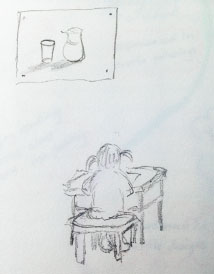
Figure 1. Fragment from Ginger’s journal illustrating the rote copying she experienced as a child
For some participants, family role models who had transmitted appreciation for the visual arts had alleviated some of the consequences of a reproductive arts education approach. The head teacher, Lucia, contrastingly, had experienced a childhood where image-making was valued as a cognitive act. She could trace how these early influences had informed aspects of her current practices.
Although the teacher participants subsequently found ways to rethink and reshape their ideas, remnants of these first experiences remained partially visible. This was evidenced through the degree to which they felt comfortable about creating their own imagery in their journals (Figure 2) in which some teachers were confident in generating images to think through ideas, and others felt more comfortable using textual means to communicate their thinking.
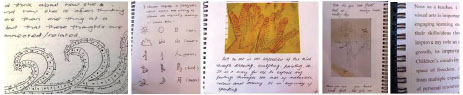
Figure 2. Fragments from the teacher participants’ art journals
Theoretical perspectives of pre-service teacher education providers
The theoretical frameworks that underpinned tertiary early childhood education programmes were revealed as either constraining or illuminating in helping teachers to develop an understanding of the visual arts as a tool to support children’s learning. Lucia, for instance, had attended university some years before the other teachers, and expressed her dissatisfaction with the dominance of a developmental approach to teaching the visual arts. This perspective was very different to her own childhood experience and so she found it difficult to embrace the notion that children’s creativity should be able to develop naturally without interaction from adults, an idea that continues to inform the practice of many early childhood educators within New Zealand (Richards, 2007). Lucia stated:
I found it quite soul destroying because there was no space for creativity. You would watch children paint a single stroke at the easel and then that was it, they were done. I felt it was because we didn’t ever sit, we weren’t supposed to ask “tell me about what you are doing there, or what are you thinking?”… they were meant to be left free to express.
Both Hannah and Ginger had attended university after the publication of TeWhäriki (Ministry of Education, 1996) when a better understanding of sociocultural/constructivist theories had developed in relation to teaching in the early childhood curriculum. In contrast, they explained how these educational encounters with this theoretical approach had allowed them to develop strong visual-arts philosophies, an outcome that McArdle (2003) and Wright (2003) argue is one way in which teachers can alleviate the influence of a developmental perspective.
Engaging with the pedagogical ideas with Reggio Emilia
The social-constructivist pedagogical ideas of Reggio Emilia have inspired some New Zealand educators to reconceptualise their visual-arts practices (Millikan, 2003; Pohio, 2009; Probine, 2014). Despite discourse that challenges the importation of these pedagogical ideas (Carter, 2009; Millikan, 2003), the findings in my study revealed that the teaching community in my research had disrupted their developmentalist assumptions about childhood and children’s capabilities in the visual arts. They had not interpreted these ideas as a “recipe” or model of practice. This was significant as it has been argued that teacher’s images of childhood strongly inform their visual-arts pedagogies (Bayes, 2005; Edwards et al, 1998; McArdle, 2003), and the ideas of Reggio Emilia had served as the catalyst that had allowed teachers in the centre to reposition image-making as a dominant language within children’s knowledge production. This is a shift that McClure (2011) argues is necessary if teachers are to value visual images as “legitimate sites of cultural knowledge production in order to ameliorate a restrictive view of childhood” (p. 27). For example, in Hannah’s journal she articulated the idea that children bring knowledge with them. She said:
The concept of the hundred languages of children inspires me a lot! I believe that children are not an empty glass coming into my kindergarten to be filled. They are a full basket coming into a different environment and society with something special to share.
In the focus-group interview, the teachers recalled the first long-term project they had engaged in (centred on the children’s perceptions of the city and the Sky Tower), where children had used image-making as a research tool. They discussed how this had been an exciting development for their teaching. Lucia explained:
We wanted to know what their [children’s] thoughts were before we went to the Sky Tower, so we had a term drawing their city and the Sky Tower. And then after they had been, we saw how it had changed. I think that was the first time we thought, “Wow… we were blown away by what we could see in what they drew”. That was a really steep learning curve for us as a whole team.
This project had taken place soon after Lucia had arrived back from an educational tour of Reggio Emilia, and her new pedagogical ideas, coupled with the success of the children’s project, was a catalytic moment in the centre’s visual-arts journey. They explained how they had all been at a point where they wanted to change, and this project motivated a long-term shift within the kindergarten where the visual arts were now embedded within the children’s daily inquires. Malin explained:
Before … thinking we did, building we did, drawing we did, but there was no connection between them, and now everything is always connected.
These new pedagogical ideas also provoked a repositioning of their roles as teachers, and they now began to see themselves as learners alongside children. This sentiment has also been articulated by Robertson (cited in Millikan, 2003) who has noted that the principles of Reggio Emilia had given her a framework in which asking questions, not knowing, and research were all permissible teaching practices.
This attitude of permissible “not knowing” was reflected in the teacher’s discussions during which they constantly renegotiated their pedagogical ideas, and expressed the desire to extend their content knowledge. This act of examining past experiences as a means to understanding attitudes towards the visual arts has been shown as important for moving across educational paradigms (Clark & de Lautour, McArdle, 2003, 2012; McClure, 2001; Richards, 2007), and is vital for developing a visual-art pedagogy that values image-making as a tool for children’s learning.
The teachers demonstrated their value for this type of process through the way they dedicated themselves to the research demands involved in this study. They noted that being involved in the case study, particularly through the act of creating their own art journals, had served as a catalyst for further change. Lucia stated:
We have been able to see ourselves through your [the researcher’s] eyes, which is a gift, because when you work in a place with other people you don’t always see what you do as anything productive. So you have given us a glimpse of seeing from a new perspective and that has been a really powerful thing.
At the conclusion of the project the teaching team decided to create a specific art studio at the centre with Hannah taking on the role of studio teacher. This new development illustrated the continuously changing pedagogical landscape that occurred as a result of a process of discussion, reflection, and research surrounding visual-arts practices.
Leadership as a motivator
One of the most significant factors in maintaining this ever-evolving process of pedagogical development was leadership. The head teacher provoked regular dialogue about the teachers’ work with children, and inspired her colleagues to want to increase their content knowledge. The lack of content knowledge required to facilitate socioconstructivist arts practices has been addressed by several authors (Hedges & Cullen, 2005; Richards & Terreni, 2013), and McArdle (2012) argues that when teachers lack confidence in the arts this can lead to teachers not pursuing further knowledge. Considering that most of the teachers had shared how their own visual-arts education had affected their confidence to engage in the visual arts as adults, the teachers’ demonstration of their desire to learn and know more about visual art was therefore of significance. For instance, Cathy said in her journal:
I want to improve my role as a responsible facilitator for children’s learning and growth, to improve my knowledge about visual arts is necessary … I am keen to encourage children to set their own tasks and goals. Naturally, they should be encouraged to participate in shaping their own directions, engaging in the arts, exploring and creating, and learning to master artistic media may help this cause.
Lucia’s deep regard for children’s image-making had provoked the teachers, in turn, to develop their understanding of visual-art education as well as increase their interest in it. In response, they began to develop a thirst for knowledge and an appreciation for professional development opportunities that allowed them to examine their own practices. As Hannah remarked, “professional development helped to change how I see children, it helped me to examine my past and choose the good things”.
Visual thinking—Children’s use of the visual arts as a tool for learning
One aim of this study was to explore the impact that sociocultural/constructivist approaches to the visual arts had on children’s visual-arts experiences in the classroom. The observations of children’s image-making made it immediately apparent just how profoundly the teacher’s pedagogical beliefs affected the ways in which children engaged in the visual arts. This notion has been highlighted in the literature (Bae, 2004; Clark & de Lautour, 2013; Eisner, 1978; McArdle, 2003, 2012; Wright, 2003). The teachers practices aligned with a guided-learning approach and they saw their roles as multifaceted. All the teachers referred to what Rinaldi (2009) calls a pedagogy of listening within their journals. For example, Ginger wrote “visual art is a valuable way for children to represent their understandings. It requires respectful ears to listen for the meaning”. The concept of a pedagogy of listening values children’s perspectives and understandings of their world and argues that the practice of listening carefully to children’s ideas can become a foundation on which all learning is built. Underpinning this notion is the understanding that learning and knowledge are contextual and subjective, and this implies that the teachers valued children’s images as artefacts through which they could begin to construct important understandings about children’s thinking and ideas (Rinaldi, 2006). However, these images were not considered by the teachers to be a window into a child’s mind. Rather, they were understood to be artefacts through which they could begin a dialogue with children about what their thinking might be. Lucia observed that teachers had begun to “ponder over children’s drawings a lot”.
Although each teacher expressed their ideas about their roles differently, they shared key values that enabled them to integrate the visual arts into children’s investigations. The visual arts were contextualised within children’s daily inquiries, and each day the teachers would invite the children to work on collaborative projects where they encouraged children to make their thinking visible by developing visual images (Brooks, 2009). During these group times the creation and sharing of images was a central part of their exchanges as the teachers valued the way visual art promoted collaboration and the co-construction of knowledge amongst the children. The teachers explained that this was because they had developed a centre culture in which the sharing of ideas was valued by the learning community. Hannah said “they can open their minds if they can listen to each other”.
An example is illustrative. On one occasion, Lucia worked with a group who had been exploring friendship. She had begun by encouraging the children to reflect on their previous work, as advocated by Vecchi (2010), and highlighted the visual strategies the children had used to represent concepts such as speech bubbles to represent thinking. As the children began to draw she observed that one of the children had struggled to squeeze several figures onto an A4 page, and so she suggested the children work collaboratively on a long sheet of card. She asked the question, “I wonder where you would all be in the kindergarten and what you would say to each other?” This provocation prompted a collaborative drawing episode where children constructed a verbal narrative alongside their drawing (see Figure 3).

Figure 3. One child artist drew himself in the playground using soft words and loud words. Alongside him, two other children drew themselves together on the tyre swing. Another child drew himself alone. “I’ll come play with you,” one of the children said, and drew himself alongside them. Later, a child artist drew a bucket by the sandpit. “I am filling it up,” she said, colouring it in. “Shhhh,” she said, making a watery noise.
Because the children were encouraged to engage with each other’s images, and to share their different perspectives, the teachers and the children came to understand that they all had different ways of seeing the world. The notion of valuing subjectivity was also promoted through the teachers’ decision to explore the notion of “diversity” with the children because, as a centre community, they had made a decision to celebrate their different cultures. For example, in Figure 4 the child artist, who was of Chinese descent, created this image to express the different kinds of friends he had within the centre. He explained how with some of his friends he could speak Chinese and with other friends he could practise his English.
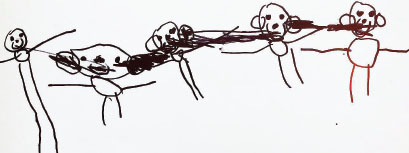
Figure 4. Friends talking in English, by child artist
These collaborative group sessions enabled the children to engage in visual thinking, a concept emphasised by Arnheim (cited in Wright, 2003). This was seen in the way children used visual art to express their ideas, and they often reflected on their thinking through their image-making. Sometimes this meant that through the process of image making they would adapt ideas further, or would change their thinking completely. Drawing became a record of thinking but also a device through which knowledge was constructed and adapted, a process Brooks (2003) noted in her research of drawing as a mediating device in the process of knowledge construction. This process is illustrated in Figure 5. On this occasion a teacher had suggested children make a record of a castle-building experience.
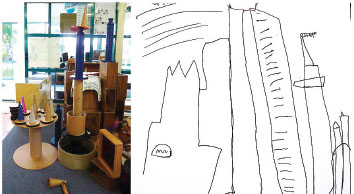
Figure 5. Through observing the castle to draw it, the child artist realised the castle did not have a flag. He added this, refining the final design, and also adding a ladder that he explained he hadn’t built yet. It was evident that this experience had allowed the child artist to adapt his thinking as well as make plans for future building.
Image-making also allowed children to examine ideas that could not be explored verbally, such as a project where they were creating symbols to describe particular physical movements. Once ideas were made visible, these were revisited multiple times as children were encouraged by the teachers to critically reflect on their thinking and representations. They were also encouraged to translate their ideas into different media, allowing them to consider ideas from a different perspective, and to further establish their understanding. This is illustrated in Figure 6.
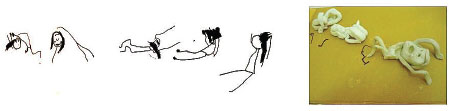
Figure 6. Forward-roll drawing and clay work by child artist
Deepening understanding and exploring complex concepts
The previous findings have highlighted that in this early childhood education setting the children were seen by the teachers as being powerful constructors of their own knowledge, and image making was valued as central to this process. The teachers in this study also expressed a desire to provoke children to deepen their understanding through image making because they valued the visual arts as a complex cognitive domain through which the children’s experiences could be explored and communicated. This reinforces the premise that the beliefs that teachers hold about young children’s learning are likely to influence how children engage in the visual arts (Bayes, 2005; Edwards et al., 1993; McArdle, 2003). It also meant that the teachers endeavoured to challenge the children with complex questions based on their multidimensional “listening” of children’s ideas and theories. This was illustrated in an excerpt from Malin’s journal where she describes how she provoked a child to consider how his body moved when he ran fast. He explained his theory both verbally and through a representation (Figure 7). He later built on this theory and created a second drawing where he explained that when he ran his heart became large and beat fast, but when he slept his heart became very small and beat slow.
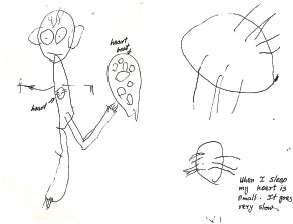
Figure 7. Drawings about my heart, by child artist
Summary
Although the majority of the six teachers at this setting had experienced didactic visual-art approaches during the early years of their own education, they had since developed visual-arts pedagogies that were strongly underpinned by sociocultural/constructivist theories. This had occurred through a process of self-reflection, further education underpinned by social-cultural theories, exploration of the pedagogical ideas of Reggio Emilia, leadership that valued the visual arts, and continued professional development that provoked collaborative teaching discussions. These factors had activated a paradigm shift in their understandings of visual-art education for young children. This research has reaffirmed that teachers can reconceptualise their visual-arts practices through an examination of their own visual-arts palimpsests (McArdle, 2003).
It was also evident that in this early childhood setting, visual art was understood to be a language in its own right. Engaging with the principles of Reggio Emilia had not only allowed the teachers to reconceptualise their images of children and childhood, but had also offered new pathways through which they could integrate image making as a contextualised part of children’s knowledge construction. Through their passionate advocacy for, and provision of, the visual arts, the children in the early childhood centre were encouraged to make their thinking visible—to themselves, to one another, and to their teachers. These practices allowed the children to transform and deepen their understandings of their own lived experiences, to co-construct knowledge with their peers and teachers, and to develop confidence in their ability to use visual images as an integrated part of their learning. Figure 8 endeavours to communicate, through a/r/tographical representation, the way the work of the children within this setting made their thinking visible.
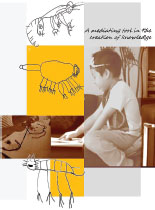
Figure 8 (l). A/r/tographic image responding to the children
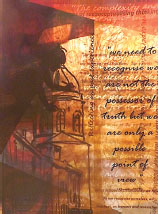
Figure 9 (r). A/r/tographic image responding to the teacher findings
Despite having developed rich visual-arts practices the teachers did not consider that they had reached their destination. They continuously sought new knowledge and opportunities to reflect on their work with children. Figure 9 illustrates my findings as a visual a/r/tographic representation that sought to make visible this complex process. The teachers were in a state of constant renegotiation, and an acceptance of the need to change was an important part of their teaching pedagogies. For this reason, this research does not provide a prescriptive teaching model, just as the schools of Reggio Emilia do not, but rather offers a glimpse at possible directions for reconceptualisation of teachers’ visual-arts practices in early childhood education. This attitude made apparent, the notion that sociocultural visual-arts pedagogies must be constantly renegotiated otherwise they become isolated from the context in which they operate.
Acknowledgements
I wish to thank, most sincerely, the teachers and children in the early childhood centre that participated in this project without whom this research would not have been possible. I would also like to thank my supervisor, Dr Jill Smith, for all her knowledge and continuous support throughout the process of conducting this research.
References
Bae, J. H. (2004). Learning to teach visual arts in an early childhood classroom: The teacher’s role as a guide. Early Childhood Education, 31(4), 247–254. http://dx.doi.org/10.1023/B:ECEJ.0000024116.74292.56
Barone, T. (2008). How arts-based research can change minds. In M. Cahnamann-Taylor & R. Siegesmund (Eds.), Arts-based research in education: Foundations for practice (pp. 28–48). New York, NY: Routledge.
Bayes, C. (2005). Provocations of Reggio Emilia: Educators making meaning about curriculum. Unpublished master’s thesis, University of Auckland.
Brooks, M. (2003, September). Drawing to learn. Beyond the Journal: Young Children on the Web. Retrieved from http://www.naeyc.org/files/yc/file/200309/DrawingtoLearn.pdf
Brooks, M. (2009). What Vygostsky can teach us about young children’s drawing. International Art in Early Childhood Research, 1(1), 1–13.
Carter, M. (2009). Doing Reggio? Exchange, (Jan/Feb), 27–29.
Clark, B., & de Lautour, N. (2013). In the flow: Relationships and rhythms in the arts. In B. Clark, A. Grey, & L. Terreni (Eds.), Kia tipu te wairua toi—fostering the creative spirit: Arts in early childhood education (pp. 131–141). Auckland: Pearson.
Clark, B., & Grey, A. (2013). Positioning the arts in early childhood education: Fostering the creative spirit. In B. Clark, A. Grey & L. Terreni, (Eds.), Kia tipu te wairua toi—fostering the creative spirit: Arts in early childhood education (pp.1–12). Auckland: Pearson.
Collier, J., & Collier, M. (1996). Visual anthropology: Photography as a research method. Albuquerque, NM: University of New Mexico Press.
Craw, J. (2011). Shifting images: Thinking ‘the child’ in, through and with visual art: (re)configuring ‘the child’ inside/outside early childhood education in Aotearoa New Zealand. Unpublished master’s thesis, University of Auckland.
Craw, J., & Grey, A. (2013). Living an art-full life: Teachers thinking in, through and with visual art. In B. Clark, A. Grey & L. Terreni (Eds.), Kia tipu te wairua toi—fostering the creative spirit: Arts in early childhood education (pp. 87–99). Auckland: Pearson.
Edwards, C., Gandini, L., & Forman, G. (1998). Introduction: Background and starting points. In C. Edwards, L. Gandini & G. Forman (Eds.). The hundred languages of children: The Reggio Emilia approach—advanced reflections (2nd ed.). Westport, USA: Abex.
Eisner, E. (1973). Examining some myths in art education. Studies in Art Education, 15(3), 7–16. http://dx.doi.org/10.2307/1319548
Eisner, E. (1978). What do children learn when they paint? Art Education, 31(3),6–10. http://dx.doi.org/10.2307/3192254
Haplin, J. M. (2011). Teachers’ meaning-making of the Reggio Emilia approach within the cultural context of Aotearoa New Zealand. Unpublished master’s thesis. University of Auckland.
Hedges, H., & Cullen, J. (2005). Subject knowledge in early childhood curriculum and pedagogy: Beliefs and practices. Contemporary Issues in Early Childhood, 6(1), 66–79. http://dx.doi.org/10.2304/ciec.2005.6.1.10
Irwin, R., & A. de Cosson (Eds.). (2004), A/r/tography: Rendering self through arts-based living inquiry. Vancouver, Canada: Pacific Educational Press.
Irwin, R., & Springgay, S. (2008). A/r/tography as practice-based research. In M. Cahnamann-Taylor & R. Siegesmund (Eds.), Arts-based research in education: Foundations for practice (pp. 103–122). New York, NY: Routledge.
Kind, S. (2010). Art encounters: Movements in the visual arts and early childhood education. In V. Pacini-Ketchabaw (Ed.), Flows, rhythms and intensities of early childhood curriculum (pp. 113–131). New York: Peter Lang.
Leavy, P. (2009). Method meets art: Arts-based research practice. New York, NY: Guilford Press.
Lewin-Benham, A. (2011). Twelve best practices for early childhood education: Integrating Reggio and other inspired approaches. New York: Teachers College Press.
McArdle, F. (2003). The visual arts. In S. Wright (Ed.), The arts, young children and learning (pp. 35–62). Boston, MA: Pearson.
McArdle, F. (2012). New maps for learning for quality art education: What pre-service teachers should learn and be able to do. Australian Educational Researcher, 39(1), 91–106. http://dx.doi.org/10.1007/s13384-012-0051-2
McClure, M. (2011). Child as totem: Redressing the myth of inherent creativity in early childhood. Studies in Art Education, 52(2), 127–141.
Millikan, J. (2003). Reflections: Reggio Emilia principles within Australian contexts. Castle Hill, NSW, Australia: Pademelon Press.
Ministry of Education. (1996). Te whäriki: He whäriki mätauranga móngämokopuna o Aotearoa—Early childhood curriculum. Wellington: Learning Media.
Pohio, L. (2009). Reggio Emilia pedagogy in early childhood education: How can this approenhance visual arts experiences in New Zealand? He Kupu: The Word, 2(2), 10–18.
Probine, S. (2014). Thinking through art: A self-study that explored the use of visual art as a tool to examine pedagogy. Te Iti Kahurangi - School of Education e-journal, 2. http://www.manukau.ac.nz/__data/assets/pdf_file/0018/172413/Probine_S-staff.pdf
Punch, K. F. (2009). Introduction to research methods in education. London, UK: Sage.
Richards, R. (2007). Outdated relics on hallowed ground: Unearthing attitudes and beliefs about young children’s art. Australian Journal of Early Childhood, 32(4), 22–30.
Richards, R., & Terreni, L. (2013). Actively engaging through the visual arts: Recognising children’s artistic experiences and repertoires. In B. Clark, A. Grey & L. Terreni (Eds.), Kia tipu te wairua toi – fostering the creative spirit: Arts in early childhood education (pp. 39–51). Auckland: Pearson.
Rinaldi, C. (2006). In dialogue with Reggio Emilia: Listening, researching and learning. Oxford, England: Routledge. http://dx.doi.org/10.4324/9780203317730
Rinaldi, C. (2009). From unpublished notes taken at a Reggio Emilia study tour by S. Probine, Italy, April 2009.
Robertson, J. (2000). Drawing: Making thinking visible. In W. Schiller (Ed.), Thinking through the arts. Amsterdam, The Netherlands: Hardwood.
Schiller, W. (Ed.). (2000). Thinking through the arts. Amsterdam, The Netherlands: Hardwood. http://dx.doi.org/10.4324/9780203450666
Springgay, S. (2002). Arts-based research as an uncertain text. The Alberta Journal of Educational Research, 48(3). Retrieved from http://ajer.synergiesprairies.ca/ajer/index.php/ajer/article/view/333/325
Stephenson, W. (2004). Digging for historical combines: Representing art education history research through art-making. In R. Irwin & A. de Cosson (Eds.), A/r/tography: Rendering self through arts-based living inquiry (pp. 153–172). Vancouver, Canada: Pacific Educational Press.
Terreni, L. (2010). A history of visual arts education in New Zealand: Looking backwards to go forwards. International Art in Early Childhood Research, 2(1), 1–11.
Thompson, C. M. (2003). Kinderculture in the art classroom: Early childhood art and the mediation of culture. Studies in Art Education, 44(2), 135–146.
Veale, A. (2000). Art goes back to my beginning. In W. Schiller (Ed.), Thinking through the arts. (pp. 28–37). Amsterdam, The Netherlands: Hardwood. http://dx.doi.org/10.4324/9780203450666_chapter_4
Vecchi, V. (2010). Art and creativity in Reggio Emilia: Exploring the role and potential of ateliers in early childhood education. Oxford, England: Routledge.
Visser, J. (2005). The historical, philosophical and theoretical influences on early childhood visual arts education in Aotearoa New Zealand. ACE papers, 16, 25–32.
Vygotsky, L. (1962). Thought and language. Cambridge, MA: Harvard University Press. http://dx.doi.org/10.1037/11193-000
Wright, S. (2003). The arts, young children and learning. Boston, MA: Pearson.
The author
Sarah Probine is a senior lecturer in the Faculty of Education and Social Sciences at Manukau Institute of Technology in Auckland. She teaches on the Bachelor of Early Childhood Teaching with a focus on the arts and creativity. Sarah’s research interests include the visual-arts role in mediating children’s learning, visual-arts pedagogies in early childhood, and wider perspectives of the visual arts in early childhood education. She is currently working towards completing a doctorate at Auckland University.
Email: sarah.probine@manukau.ac.nz