Music teachers talking: Views on secondary school curriculum content
Graham McPhail
Abstract
This article reports on the views of secondary school music teachers in relation to curriculum content in New Zealand. We know very little about music teachers’ response to the cultural and educational changes of recent times and how these changes are being reflected and managed in their curriculum decision making. The article outlines and discusses responses obtained in a recent survey (N = 99). The data suggest that music teachers remain committed to progressive student-centred ideals as they struggle to balance demands for relevance in a crowded music curriculum with the changing nature of musical knowledge itself.
Introduction
While the influences brought to bear on curriculum realisation within the field of music education are complex, Westbury (2002) suggests that “it is teachers with their priorities and their ambitions … not curricula or policies, who animate the work of schools” (p. 156). Despite this observation, we know very little about music teachers’ views of the cultural and educational changes of recent times and how they are being reflected and managed in their curriculum decision making. This is particularly significant in New Zealand where teachers experience a high level of autonomy in realising the content of the curriculum. The New Zealand Curriculum (Ministry of Education, 2007) is intended to set “the direction for teaching and learning … but it is a framework rather than a detailed plan … schools have considerable flexibility when determining the detail” (Ministry of Education, 2007, p. 37). There is, however, the presence of a more prescriptive driver of curriculum content in secondary schools in the achievement standards required for national qualifications (Hipkins, 2010), but even the purpose and realisation of these standards, their intent and the knowledge they contain, can be a dynamic and contested process (see, for example, the musicnet discussion below). Teachers in New Zealand work in an environment with a peculiar mix of progressivism and neoliberal-driven performativity (Mutch, 2013); however, a strong commitment to students’ well-being and development remains prevalent as teachers attempt to align official discourses for learning and assessment with broader learning ideals (Alcorn & Thrupp, 2012; McPhail, 2013a).
The objective of this survey was to collect and analyse data obtained from secondary school music teachers about (a) the styles of music and dimensions of musical learning they choose to include in the curriculum—in other words, what knowledge they value through curriculum inclusion, and (b) the influences on those choices. The survey was designed to complement a series of qualitative case studies carried out in a recent study (McPhail, 2013a) in which the findings suggest that there is a constant tension for teachers in attempting to find a balance between epistemological and social dimensions of learning. In other words, how is balance to be found between students’ interests and providing them with access to knowledge that leads somewhere? This concern is most clearly seen in the tension between classical and popular music, and music theoretical knowledge and practice (Bowman, 2004; Walker, 2009). In that research, I was surprised to find a reasonably strong commitment remained to theoretical knowledge despite moves towards broadening the music curriculum in New Zealand to include new ways of demonstrating musical skills and knowledge, diverse styles, and the musical interests of students. The purpose of the survey was to find out if similar tensions were present among teachers more generally. Many of the teachers who participated in this survey do note a tension between practical work and theory, between student interest and knowledge content of the discipline in its more traditional manifestations.
The survey attempted to find out what choices teachers were making and why. At a deeper level, these are educational and cultural matters regarding the nature of knowledge and learning. On one level, the research is an exploration of the challenge to the traditional emphasis on classical music1 within education brought about by the ubiquity of western popular music forms. To a large degree, classical music remains the embodiment of modernist ideals of high culture, symbolising tradition, authority, complexity, and artistic attainment. On the other hand, popular music seems to embody challenge, change, and an immediacy of appeal as it is carried on to the school site by young people. At a deeper level, the research identifies tensions between different forms of knowledge, informal and disciplinary, and the role each might play in cultural transmission and transformation within the school.
Educational context
More than most other subjects, music is influenced by cultural change (Westbury, 2002) and this is creating immense challenges for teachers regarding the conceptualisation and realisation of a meaningful and relevant music curriculum (Hargreaves, Marshall, & North, 2003; Jorgensen, 2003; Sloboda, 2001; Walker, 2007). Walker (2007) argues that the role and function of popular music has emerged as the most pressing issue within formal music education the past few decades, and Bowman (2004) suggests that the implications for taking popular music seriously go “to the very heart of music education and curriculum theory” (p. 31). In response to notions of relevance, many music teachers are providing opportunities for students, inside and outside the classroom, which acknowledge the popular musical culture that is so prevalent beyond the school gates (Green, 2008). While the idea of relevance is a recurring one in Ministry of Education discourse, the issue is more complex than simply filling the curriculum with “relevant” knowledge. For both students and teachers, it may be difficult to appreciate what is relevant now and what may become relevant later (McPhail, 2013b).
Until the 1990s, the secondary school music curriculum privileged academic knowledge over procedural knowledge of various types (e.g., performing and composing) and from limited stylistic fields (e.g., only Western classical art music and jazz); a focus on works of music rather than more practical and active dimensions of music-making and creation. This academic approach harks back to 1945 when music first entered the canon of academic subjects with its inclusion in the syllabus for the national School Certificate (Thwaites, 1998). The music examination was academic (written, declarative knowledge) and entirely classical in its conception, and in essence it remained so until 1993 when a radically new curriculum and assessment system was introduced. The 1993 revision included internal assessment of instrumental performance and composition and the abolition of nationally prescribed set works. Teachers become empowered to modify and adapt national guidelines for the local context. These changes facilitated the inclusion of popular and other music within the curriculum and allowed for a new “student-centred” approach to curriculum conception. In 2002, further and more substantial changes were instigated with the arrival of the National Certificate of Educational Achievement (NCEA), in which “packages” of knowledge and skills offer a wide range of assessment possibilities in support of courses that teachers can devise locally to meet the needs and interests of their students. In 2007, The New Zealand Curriculum provided the final means for the localisation of curriculum content by combining earlier separate curriculum documents into one volume with content guidelines reduced to generic outcomes statements.
That New Zealand secondary music teachers have considerable autonomy in the development of curriculum approach and content is often evidenced by discussion on the Ministry of Education website musicnet (http://artsonline.tki.org.nz/Communities/Musicnet/). For example, comments from a 2009 discussion thread highlight the contested nature of underlying beliefs regarding the purpose of education and how this manifests itself in music curriculum content and pedagogic approaches:
Increasingly the very vague curriculum documents seem to lend themselves to simply teaching to students’ particular interests/tastes/preferences and not bothering to educate them more widely into the diverse richness of other music styles and genres. Are we not supposed to be “educators”?? (Teacher A).
Of course teachers should listen to their students and find out what their students want to learn. It is about the students, their music, their education, not the teachers. By way of metaphor the teacher can be at the centre of an empire, colonising the students—a political model one hopes we have discarded or ... the teacher can participate in a democratic milieu in which everybody gets recognised (Teacher B).
Versions of this argument appear periodically on musicnet. Most recently the discussion was framed in relation to whether music teachers should expect students to notate their compositions for assessment or follow a more “real world” popular music approach without reliance on notation. Some teachers argue that skills in music notation, which are a requirement of the standard under discussion, can be seen as a barrier to legitimising the musical skills and capacities of many students who may lack theoretical knowledge. The alternative view is that learning to read music is a means to access the symbolic codes that musicians work with in many contexts:
I have students who have done amazing recorded arrangements … unfortunately for them the arrangement standard states “The arrangements are represented as accurately notated scores”. These students do not have the skills to notate their highly complex arrangements. Does anyone have a work around? I am hoping to award these student credits based on their well-developed arrangement skills, as isn’t that what the standard is supposed to be about arranging not on how well they can notate? (Teacher C).
The point at Level 3 is to educate students in, through, and about music. Sure head arrangements are fine in some cases, but this standard seeks to enable students to represent their musical intent in ways that others can use. Why we seem so set on turning out non-readers is beyond me. Turning out musicians who can both read and write notation AS WELL AS have a good ear should be the aim (Teacher D).
I think that as music teachers we shouldn’t be alienating the talented musicians that learn and play only by ear. Maybe our current system of standards could be better adapted to provide opportunities for them - such as an arrangement standard that only requires a recording, and song-writing standards that don’t require notation (Teacher E).
So on the one hand teachers are concerned to broaden student experience and elaborate the codes and traditions of the discipline—but which codes and whose discipline? On th other hand, teachers appear to suggest that students’ learning is best facilitated by focusing on their aspirations and their “own” music. This is the view dominant in the music education literature as expressed through developments such as the United Kingdom’s Musical Futures programme (Green, 2008) and other writers who argue for a more participatory and student-centred approach to music education through informal approaches (Davis & Blair, 2011; Feichas, 2010; Folkestad, 2006; Philpott, 2010).
A third, more pragmatic view, supported by the data in this survey, suggests teachers attempt to find a balance between legitimation of where students “are at”, taking into account their interests and skills, while on the whole still aiming to provide them with access to some of the collectively developed conceptual knowledge of the discipline; for example skills in notation (McPhail, 2012a; 2013c). The musicnet discussion above demonstrates, however, that even some knowledge generally considered foundational may be contested when it appears to create a barrier to student “success”. The issue of engaging students with curricular content that may appear less than relevant, or more difficult, is one faced by educators in all curriculum areas (for example, the debate about the inclusion of Shakespeare in the English curriculum), but such issues are particularly significant in music where the curriculum is more directly affected by external fields of practice and cultural influence:
Education in science and mathematics does not pander to mere opinion and personal preference; it doesn’t allow you to continue to carry on thinking the world is flat or that men are more intelligent than women …. Music’s place in cultural history is eclipsed by the overwhelming insistence on its function as personal pleasure—a problem that French, history, or geography do not face. (Johnson, 2002, pp. 117–118)
The response to issues of access and relevance in western nations has been to weaken boundaries between general knowledge and the specialised nature of disciplinary knowledge (what Bernstein terms vertical discourse). Bernstein (2000) describes this weakening of boundaries as a form of “pedagogic populism in the name of empowering or unsilencing voices to combat the elitism and alleged authoritarianism of Vertical discourse” (p. 170). Our own Ministry of Education seems to follow this line when it states that learning should be “relevant to students’ lives now … (as opposed to learning relevant only to a limited range of possibilities from the past)” (Ministry of Education, 2009). Maton & Muller (2007) note the problem in this approach in that it attempts to deny or dilute the epistemological basis of much knowledge content rather than attempting to bridge the gap for students into the codes of that knowledge which they may well need (Delpit, 1997; Maton & Muller, 2007). The issue for curriculum, then, at a deeper level becomes one of rights of access to “powerful knowledge” (Young, 2013). Just what powerful knowledge in music may be remains contested (McPhail, 2014a; McPhail, 2014b), but as one teacher in this survey suggested: “I think people are finding it hard to let go of the classical music focus and move to a more contemporary focus which is more engaging for students”(Q24).
The analytical parameters of the research were set by the underlying questions: What musical styles and dimensions of musical knowledge are included in the curriculum and what are the influences on these decisions? The literature and my research (McPhail, 2012a; 2012b; 2013a; 2013b; 2014a; 2014b) suggest that teachers act as “recontextualising agents” (Bernstein, 2000); as adaptors of the broad official guidelines provided by the state (Ministry of Education, 2007). This is done in interaction with their professional worlds and art worlds (Martin, 2006), as well as their own values and beliefs. Such a perspective would suggest that meanings within the world of music education are the result of a web of factors made increasingly complex as they intersect with educational and cultural fields.
Method
An email invitation was sent out over the musicnet music teachers’ web site inviting any interested secondary school teachers to take part in the anonymous survey through Survey Monkey. Activating the survey electronically from the participant information sheet was deemed as giving informed consent. One hundred and twenty-two participants began the survey with a number not completing all questions. The survey included closed and open questions relating to teachers’ musical backgrounds and strengths, teaching programmes, and teachers’ curriculum decision making. Survey Monkey provides data in the form of tables and charts with filter options. The survey was open over a 3-week period in November to early December 2013. Seventy-two percent of respondents were from city schools, 23 percent from small-town schools, and 5 percent from country schools. Teachers from state schools comprised 71 percent, integrated schools 18 percent, and independent 11 percent. While guided by the wider sociological contextual perspectives in the literature (see above), the themes and findings in this article are derived inductively from the data through use of the generally accepted procedures for coding and thematic analysis (Corbin & Strauss, 2008; Thomas, 2006). Cognisance of the broader context provides the framework from which the teacher data is interpreted and given wider meaning. The themes chosen focus on curriculum content, influences on that content such as assessment and teachers own musical values and backgrounds, and issues raised by teachers as significant in relation to curriculum. Identifying possible influences on the curriculum decision making of music teachers, and thus illustrating teachers’ “values”, is dependent on a diverse data set of both, and this study aims to make a contribution to identifying these influences within the limitations of the survey format. There are some data not reported on in this article.
Discussion
Music teachers as artist-teachers
The dual role of music teachers as artist-teachers is well documented in the literature (e.g., Bernard, 2004), and Elliott (1995) in his seminal work on music education suggests that excellent music teaching is an excellent “teacher-musician” in action. In this survey, teachers were asked what particular strengths they brought to music teaching (Q2) and in what ways these strengths affected their curricular and cocurricular (out-of-class ensembles) choices (Q3). Interestingly, in response to Q2, instrumental performance was highlighted as a strength for more than four out of five teachers (84 percent) above other dimensions (see Figure 1).
As one participant noted, music teachers require both “leadership in pedagogy and excellence as a performer” (Q3). Many teachers noted the relationship between their professional or semiprofessional performance background and the skills and emphasis they brought to their work (Q3). As well as leading cocurricular activities, teachers may become involved in the support of students by playing for assessments, and also bringing their own practical knowledge into the teaching and assessment context despite the fact they do not teach the instruments to their students: “My strengths help guide students in their assessment in music classes—particularly composition and performance” (Q3). A teacher’s own interests, strengths, and passions can be a source for curricular inclusion and also a potential source of motivation for students as one participant suggested: “I do often teach works that I know and love well. I think my passion for them helps to sell them to my students”.
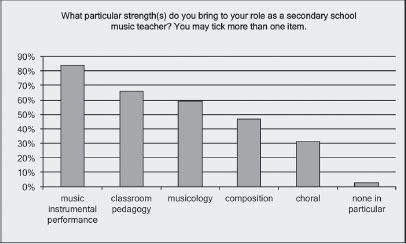
Figure 1. Strengths music teachers bring to their role (Q2)
On the other hand, while some teachers were clear that while they include what they are most confident about and interested in, they may also “tackle something new to accommodate students’ interests”. One teacher noted the relationship between pragmatic “survival” concerns and developing new content: “I ‘play to my strengths’ at busy times of the year which also means I make an effort to go outside my comfort zone in order to remain fresh and alert at ‘fresh’ times of the year (not that there are many of those!)”. Four teachers noted technology as a means to connect with students for creative ends: “Because I love to write songs, and am comfortable with Garage Band, using real instruments, and midi keyboards, I like to teach these skills”. One teacher took a different perspective, suggesting that we need to be cautious about personal strengths and interests affecting curricular and cocurricular choices as they might act as a constraint on opportunities for students: “I try to have a variety of co-curricular activities so as many students as possible can be involved” (Q3).
Teachers who perform rock music regularly (Q23) include composition in their option programmes more than other teachers (82 percent compared to 66 percent for “classical teachers” and 67 percent for “jazz teachers”). One explanation may be the often holistic way in which rock/pop musicians move from performing into song writing (Green, 2002b). Teachers are inclined to favour their own area of speciality in option programmes; for example, 70 percent of jazz musicians include jazz in their programmes compared with 46 percent in the total sample.
Curriculum content
Perhaps unsurprisingly, performance and composition were the dimensions of curriculum most emphasised in both core (compulsory classes) and option (elective) music programmes, with theory and history following behind (see Table 1). The shift from music as an academic subject to one with high levels of practical application (Elliott, 1995) is clearly seen. The logic of school music as a practical sonic experience and teachers’ response to students’ desire to “play”, along with assessment changes that support this view, are all factors in this shift in emphasis (see also Green, 2002a).
Table 1. Teaching dimensions
| In your teaching, which music teaching dimensions do you focus on MOST? You may choose up to three. |
| | Response Percent |
| Answer Options | Q10 CORE (%) | Q11 OPTION (%) |
| Performance | 74 | 78 |
| Composition | 53 | 69 |
| Theory | 52 | 46 |
| Music history | 16 | 39 |
| Technology | 13 | 7 |
| Analysis/score reading | 12 | 24 |
| Singing | 9 | 4 |
Delving more deeply into learning dimensions of the curriculum (composition, music theory, music history, score reading/analysis, singing, performance, theory, technology), it is interesting that the relative prevalence of included dimensions are the same in both option and core programmes (Q10 and Q11). One noticeable aspect is that more than twice as many respondents named music history as a focus of their option programme than they did their core programme. There was a similar pattern for analysis/score reading. This suggests the presence of the more theoretical aspects of knowledge coming into play, as we might expect, for option students. There is a concern (reflected in Q24 and Q25) that the curriculum needs to retain access for students to some theoretical knowledge, particularly for those who may wish to progress to tertiary study. There was a concern about the “dumbing down” of the curriculum (see curriculum issues below). Conversely, technology was a focus for twice as many teachers in core programmes than in options.
Looking at stylistic inclusion in core music (Q5), 77 percent of respondents named pop/rock as a frequently used style whereas only 45 percent include classical music frequently in their core programme. In option music (Q6), however, pop/rock and classical are equally included as significant components (79 percent and 75 percent respectively). It is interesting to note that the teachers in girls’ schools were less likely to include pop/rock as a prominent component in their option courses. Jazz and world music are less used in both core and option courses, reflecting the findings of Green’s survey of United Kingdom teachers (2002a), although jazz is still reasonably prominent in option programmes (48 percent).
Influences on curriculum decision making
Given the central importance of teacher input into curriculum content, a question was asked about the influences on teacher decision making (Q12). Both from my teaching experience and experience as an NZQA national moderator, and from the literature (e.g., Hipkins, 2010), we know assessment is major driver of curriculum realisation. We might also expect the national curriculum document to be a major influence (Ministry of Education, 2007) as well as other aspects such as school culture, student-centred educational ideals, and perhaps the personal musical preferences or skills of teachers. From a selection of these possible influences (see Table 2) 74 percent of respondents identified the achievement standards as one of the strongest influences on curriculum content for option classes. This was followed by student demand/interest at 62 percent and personal beliefs about curriculum at 54 percent. Interestingly the national curriculum document comes some way down the list.
Table 2. Influences on option curriculum choices (Q12)
| Which of the following are MOST influential on your OPTION curriculum choices as indicated in question 11? You may choose up to three. |
| Answer Options | Response (%) |
| Achievement Standards | 74 |
| Student demand/interest | 62.5 |
| Personal beliefs about curriculum content | 54.2 |
| The New Zealand Curriculum | 47.9 |
| Personal musical skill set/areas of speciality | 30.2 |
| School Culture and Policy | 15.6 |
| Expectations of the parent community | 3.1 |
| Scholarship Examinations | 2.1 |
While the achievement standards clearly exert a strong influence on the curriculum (as shown in Q12), this is not necessarily a negative influence. There is a great deal of flexibility within the standards in terms of possible content, which provides teachers with room to develop local programmes that accommodate local needs and student interest while still using the standards to provide a structure for courses and content. On the other hand, given the range of knowledge content possible within the music curriculum, a key question for music teachers is to identify any particular content considered essential to include in a secondary school music programme. Teachers are able to avoid assessment of more difficult areas, but this does not necessarily mean they do not teach these aspects.
Teachers were also asked how option content should be determined (Q14) given choices between nationally prescribed (1 on a Likert scale of 1 to 5) or school prescribed (5 on the Likert scale). They were also asked to indicate how much influence student interest should have on option content using the same scale (Q15). There was a mean of 4.8 in favour of locally devised content and a mean of 4.4 for factoring in student choice. One teacher summarised the issue of influences on curricula content:
Balancing the incorporation of the NZ curriculum, student interest, school policy and the teacher’s own strengths is incredibly difficult. Music is a subject of such a wide range that the teacher must prioritize what is taught—this can be difficult when his or her professional judgment is influenced by so many other factors. (Q24)
Essential content
A key question in the survey asked teachers to consider if there was any particular content they considered essential to include in their classroom programmes (Q13). This question arises from a concern in the literature that in the localisation of curricular content, some fundamental concepts needed for students to access higher levels of engagement may be compromised (McPhail, 2014a; Rata, 2012; Wheelahan, 2010). As Wheelahan (2010) suggests, “a focus on ‘knowledge in use’ may result in students being given access to contextually specific applications of disciplinary knowledge but not the system of meaning in which it is embedded and made meaningful” (p. 119). One teacher suggested there is a “huge disparity between what content one school teaches in comparison to another”. The musicnet discussion included in the introduction to this article is an example of how content considered fundamental by some teachers (in that example, skills in music notation) are questioned as even necessary or relevant by others. The possibilities for curricular inclusion are so wide and open in music that an important discussion may be required concerning agreed fundamental concepts (McPhail, 2014b). One answer may lie in the distinction between concepts and content; concepts can be taught through varied stylistic contexts. As one teacher suggested, “It is important to look at a broad mix of practical and academic approaches and understanding; e.g., performance, composition, theory, history, but these things can all be applied through various genres”.
Of the 98 responses to the question of essential content (Q13), 55 teachers identified performance as central to a music curriculum. Theory/notation/or score reading were cited by 53 respondents, composition by 38, and aural/listening by 34. Twenty-three respondents also cited the need for a broad curriculum as an essential guiding factor in their curricular conception and realisation. While the emphasis on theory and notation may appear surprising given the shift to more student-centred “relevant” performance-based work, these more theoretical dimensions were often described not as ends in themselves but as the foundational knowledge for other dimensions such as performing and composition. For example:
An understanding of notation and score reading is desirable but not always achievable with the mix of abilities in each class. This is designed to support solo and group performance pieces (essential) as well as composition tasks.
Theory must be attached to a practical aspect rather than taught in isolation or out of context.
Secondary school music programmes need to contain the opportunity for students to study musical theory with academic rigor, and participate in a range of scaffolded multi-contextual practical music making experiences that will allow practical application of this theoretical knowledge.
These comments (all from Q13) may point towards teacher emphasis on foundational knowledge dimensions in the sense they enable greater understanding and fluency with the more creative aims of performing and composing. They could also point to an ideological bias given that classical music was indicated as the style most engaged in by teachers as listeners and performers (Q21, Q22, and Q23). Theoretical knowledge and classical music are strongly linked through more traditional and formal modes of music education and the majority of teachers clearly see theoretical knowledge as important. On the other hand, once again citing the musicnet discussion above, some teachers do question to necessity of theoretical content where in the “real world” many musicians, particularly in the popular music field, appear to function well without it. As one teacher suggested: “Make it relevant for the world today … Get students interested by which ever means gets them hooked—don’t make it privileged or elitist. Don’t bore kids”. Here we run head on into the perennial educational problem noted by Dewey in 1938: “It goes without saying that the organized subject-matter of the adult world and the specialist cannot be the starting point. Nevertheless, it represents the goal toward which education should continuously move” (1938, p. 83). As Michael Young has noted (2009), disciplinary knowledge may not always appear relevant to students and is often difficult; nevertheless, this is a central part of what schools are for. If this more “difficult” and specialised knowledge is not available to students at school then where might they acquire it?
The idea of a broad curriculum linking to wider educative ideals was mentioned by many teachers (Q13), expressed in descriptions such as “wide”, “balanced”, integrated”, “holistic”, “love of learning”, and “open mind”. Interestingly, the key competencies from the national curriculum were explicitly mentioned by only one respondent, but were embedded in comments such as “developing lifelong learners in the world of music”, “be part of a community of learners who support/mentor each other in their journey to develop as a musician”, “build their confidence and humanity through their musical experiences”. It may be that music teachers see the key competencies as so deeply embedded in a music curriculum that they scarcely demand mentioning.
Teacher music knowledge
If Elliott’s (1995) statement that an excellent music programme is an excellent teacher-musician in action, then teacher knowledge is a significant component of the likely success of curriculum realisation in schools. Within the sociology of education there is a growing literature about the knowledge blind spot in education discourse; the fact that there is a focus almost exclusively on pedagogical knowledge rather than on the pivotal relationship between content and pedagogy (Maton, 2014; Muller, 2006). The focus in this survey, however, was on teacher perception of knowledge gaps rather than the relationship between knowledge and the more specific details of its pedagogical realisation through selection, sequencing, pacing, and evaluation (Bernstein, 2000). Given the immense challenges for teacher knowledge required in music education, did teachers perceive a lack of content knowledge as significant for them in carrying out their work?
While teachers said their qualifications had prepared them well for teaching (a mean of 5.2 on a 1–7 scale), in the open question on this topic (Q20), three areas were most prevalent as gaps in music knowledge: knowledge of technology, the teaching of composition, and more knowledge of pop and jazz performing. Given the ever-changing nature of music technology, it is not surprising that this area was mentioned most frequently by teachers. However, there was a range of responses identifying as many areas as there are in the music curriculum. Responses include:
The ever changing world of music technology
A stronger knowledge of jazz harmony/chords
I have never taught music works or score reading and would not be confident teaching them.
Deeper knowledge of harmony & counterpoint & analysis
Teaching Composition
Conducting
I am focusing on making music standards. I would like to try some others but lack the confidence to even go there.
One teacher suggested that the knowledge demands for a music teacher might be more manageable if, like art, “we divided the subject into composition class, performance class, music tech class, musicology class etc.” One teacher commented, “as a music teacher you need to be an expert in all aspects and many styles of music, and I’m sure very few of these people exist!” Interestingly one teacher suggested a possible causal link between teacher knowledge and the apparent lack of student interest in the “harder” and more theoretical aspects of the curriculum:
When I look at the low national numbers of students taking Level 3 (NCEA) music standards such as analysis I wonder whether this is entirely the result of lack of interest on the part of students, or whether it is music teachers who find the senior curriculum challenging.
The content knowledge of two rock graduates reported in some recent case studies (McPhail, 2013b) suggested that teacher content knowledge was a significant issue for younger teachers coming to teaching through more varied routes, however this remains a challenge for teachers from any stylistic background.
Curriculum issues
There were many issues identified in the open question (Q24) concerning significant curriculum challenges for music education: the challenge of teacher knowledge in a diverse subject (including technology), the workload for music teachers (particularly the balance between curricular and co-curricular programmes), lack of resources, lack of space, too little time to cover the curriculum, a lack of student skill development prior to NCEA, consistency in assessment between schools, insufficient itinerant teacher time, catering for diverse students in one class and across the department, tertiary training of teachers, the status of music as a subject, declining musical literacy, and the demands of assessment.
As might be expected, the pressures and problems associated with the assessment of NCEA was the most prominent theme in question 24. Teachers noted how assessment becomes the driver of curriculum but also noted other concerns such as a lack of resource availability, inter-school variability in both curriculum content and assessment outcomes in part due to the perceived “subjective nature of assessing music performance, assessing performances of genres you are not familiar with”. Associated with assessment concerns, teachers noted the constant challenge in having sufficient knowledge to draw on in such a diverse subject. Teacher knowledge and valid assessment are mutually dependent, as one teacher noted:
The NZ secondary music teacher needs to be an expert of everything in terms of music, which does not necessarily reflect his/her own training (which is normally rather narrow). This can become a challenge for teachers in smaller departments, especially if they don’t form cluster groups etc. for subject support. As evidence of this, take the many questions on musicnet on assessment practices, which demonstrate an individual teacher struggling with how to interpret a particular aspect of the assessment.
A further frequently cited concern in the question on curriculum issues was about the “dumbing down” of the curriculum and the problem that “NCEA doesn’t equip students for university study adequately”. This, of course, raises the issue of what the purpose of NCEA is and the fact that the one qualification seeks to provide diverse pathways for students. One teacher noted “The growing trend that programmes are becoming predominantly rock/pop/contemporary genre is driven in the hope students will engage and enrol in music courses. However fundamental skills and depth of musical knowledge is being sacrificed as a result”. Another teacher commented that “selling notation and theory to students as a highly valuable and useful skill is a challenge”. What might schools offer students such as those mentioned in the musicnet commentary who have highly developed skill and knowledge within a particular taste community (very likely developed independently of the school), but cannot meet the requirements of certain standards? Where does the current trend of remixing fit into music assessment—as composition, or arrangement, or neither? As technology continues to provide new ways of demonstrating musicianship, the music curriculum may struggle to keep pace. One teacher encapsulated the challenges well, suggesting the significant curriculum issue is “developing courses which engage and cater for the diverse musical needs of our students: those who are rock/pop, classical or ethnic instrumentalists of varying abilities, to those whose passion is technology/recording/sound—usually all within the same class”.
The status of music as a school subject and its apparent lack of relevance for serious study was also one of the key issues cited in the survey. Music initially joined the academy of accepted subjects in the school by becoming highly academic (Drummond, 2003). The changes in the 1990s and early 2000s certainly broke the hegemony of this approach and enabled a curriculum more reflective of diverse musical practices. Nevertheless a problem of status for music clearly remains despite this huge shift in its curricular content. One teacher described the problem:
There is a constant battle, still after all these years, of music being perceived as a “proper” subject, and as a consequence option classes being filled by students who think it is an easy run, or, and perhaps more significantly, shrinking senior music classes. This is especially prevalent with the current push on the Sciences and Universities starting to recommend three sciences in Y12 and 13.
Up to 2011 at least, there was an increase in the number of students enrolling for senior school music (NZQA, 2011) yet music numbers remain lower than those for visual arts, reflecting trends in the United Kingdom (Bray, 2000; Lamont & Maton, 2008). Music’s “poor relation” status within the arts is partly due to a perception that music is strongly related to talent and the idea that students will already possess certain skills (or talents) before opting for music as a subject in high school (Lamont & Maton, 2008). This stands in strong contrast to the perception that students can learn dance, drama, and art in the classroom. As one teacher noted, it is difficult “keeping music a viable option, when subjects such as Drama and Photography can be picked up so much more easily (don’t need so many years of practice)”. The problem for music is also complicated by music’s strong presence as a cocurricular activity and by the perception that it is not a viable vocational option. One teacher noted that “The focus of the Ministry and most schools is on Literacy and Numeracy—the Arts are considered pleasant extras by too many”.
Conclusion
While a functionalist account of schooling remains dominant within New Zealand secondary schools, my research into music curriculum and pedagogic change supports a dynamic rather than a deterministic view of music teaching and learning. Intermixed with the transmission of accepted knowledge and values is the influence of more critical models of schooling which acknowledge the classroom as a site where different modes of knowledge meet: academic, procedural (playing, composing, arranging), and social (knowledge students bring from informal settings). It is the teacher who must meet the challenge of making both boundaries and commonalities visible for students through teacher knowledge of subject content and pedagogy.
The data in this survey support the thesis that teachers often struggle with competing influences on curriculum realisation. The data also show that teachers have responded to opening up the music curriculum to diversity and plurality—highly valued ideals in current education and cultural discourses. This is not surprising given that a great deal of the impetus and subsequent detail associated with the significant curriculum changes in the 1990s and in NCEA came from teachers and their desire to create a curriculum more representative of the wide world of musical experience. At a deeper level, though, such changes are representative of the growing influence of fundamental shifts in cultural and educational perspectives. In the case of senior school music in New Zealand, the reshaping of the subject over the past two decades has been far-reaching. Some scholars describe this as “a discursive shift in legitimation from knowledge to knower” (Bernstein, 2000, p. 170) reflecting changes towards “more expansive, participatory, and broadened conceptions of knowledge, involving the development and interests of the student rather than the authority of received knowledge” (McEneaney & Meyer, 2000, p. 204).
While the arts, including music, provide learning contexts where student-centred approaches are particularly apposite, there are growing concerns about the conflation of pedagogy and content to the detriment of content (Rata, 2012; Maton, 2014). There is a developing literature on the importance of specialised knowledge and the role of the school in providing access to this knowledge for all students (Young & Muller, 2013; Rata & Barrett, 2014). In keeping with this view there seems at least a tacit recognition by music teachers of an epistemological realism underlying the conceptualisation of teaching and learning represented in this survey. Most teachers seem to be saying that the drivers of student-centred relevance and choice need to be balanced with access to the systems of meaning associated with the discipline; students’ right to “enhancement” through contact with the transformative potential of knowledge content they may not know or know about (McPhail, 2014a). This, as Bernstein (2000) put it, “is the right to the means of critical understandings and to new possibilities” (p. xx). As one teacher suggested, we need to “encourage students to be open-minded while helping them pursue excellence in their own field”. Yet the challenge remains; as Bereiter (2002) has noted, “How do we make contact between students’ interests and the big ideas that form the intellectual life of a civilization? How do we teach things that lead somewhere?” (p. 339). Given the unlikely possibility for one music teacher or even one music department to provide expertise for every taste-community, a more realistic aim for music education may be for teachers to model musical expertise in a particular style while taking on the responsibility for providing “connective” foundational conceptual knowledge to enable students to participate with confidence in their chosen area of interest. Teachers therefore would need this conceptual knowledge themselves.
Acknowledgements
I would like to acknowledge and thank the teachers who responded generously to the request to participate in this survey. I would also like to thank Heather Gummer for her assistance with data analysis and charts.
Note
References
Alcorn, N., & Thrupp, M. (2012). Uncovering meanings: The discourses of New Zealand secondary teachers in context. New Zealand Journal of Educational Studies, 47(1), 107–121.
Bereiter, C. (2002). Education and mind in the knowledge age. Mahwah, New Jersey: Lawrence Erlbaum Associates.
Bernard, Rhoda (2004). A dissonant duet: Discussions of music making and music teaching. Music Education Research, 6(3), 281–298.
Bernstein, B. (2000). Pedagogy, symbolic control and identity: Theory, research, critique. (Rev. ed.). New York & Oxford: Rowman & Littlefield.
Bowman, W. (2004). “Pop” Goes...? Taking popular music seriously. In C. X. Rodriguez (Ed.), Bridging the gap: Popular music education (pp. 29–50). Reston, VA: National Association for Music Education (USA).
Bray, D. (2000). An examination of GCSE music uptake rates. British Journal of Music Education, 17(1), 79–89.
Corbin, J., & Strauss, A. (2008). Basics of qualitative research: Techniques and procedures for developing grounded theory (3rd ed.). Thousand Oaks, CA: Sage.
Davis, S. & Blair, D. (2011). Popular music in American teacher education: A glimpse into a secondary methods course. International Journal of Music Education, 29(2), 124–140.
Delpit, L. D. (1997). The silenced dialogue: Power and pedagogy in educating other people’s children. In A.H. Halsey, P. Brown, & A.S. Wells (Eds.), Education, culture, economy, and society (582–594). Oxford: Oxford University Press.
Dewey, J. (1938/1997). Experience and education. New York: Touchstone.
Drummond, J. (2003). Music and the arts: A special kind of knowledge. In E. Grierson & J. Mansfield (Eds.), The arts in education: Critical perspectives from Aotearoa New Zealand (pp. 47–62). Palmerston North: Dunmore Press.
Egan, J. (2014, March 5). Re: Arrangement/notation work around anyone? [Online forum comment]. Retrieved from http://artsonline.tki.org.nz/sympa/archive/musicnet/2014-03/msg00034.html
Elliott, D. (1995). Music matters. New York: Oxford University Press.
Feichas, H. (2010). Bridging the gap: Informal learning practices as a pedagogy of integration. British Journal of Music Education, 27(1), 47–68.
Folkestad, G. (2006). Formal and informal learning situations or practices vs formal and informal ways of learning. British Journal of Music Education, 23(2), 135–145.
Green, L. (2002a). From the western classics to the world: Secondary music teachers’ changing attitudes in England, 1982 and 1998. British Journal of Music Education, 19(1), 5–30.
Green, L. (2002b). How popular musicians learn: A way ahead for music education. Aldershot, UK: Ashgate.
Green, L. (2008). Music, informal learning and the school: A new classroom pedagogy. Aldershot, UK & Burlington, USA: Ashgate.
Hargreaves, D., Marshall, N., & North, A. (2003). Music education in the twenty-first century: A psychological perspective. British Journal of Music Education, 20(2), 147–163.
Hipkins, R. (2010). The evolving NCEA. Wellington: New Zealand Council for Educational Research (NZCER).
Hopper, D. (2014, March 6). Re: Arrangement/notation work around anyone? [Online forum comment]. Retrieved from http://artsonline.tki.org.nz/sympa/archive/musicnet/2014-03/msg00057.html
Johnson, J. (2002). Who needs classical music? Cultural choice and musical value. Oxford: Oxford University Press
Jorgensen, E. (2003). Transforming music education. Bloomington, Indiana: Indiana University Press.
Lamont, A., & Maton, K. (2008). Choosing music: Exploratory studies into the low uptake of music GCSE. British Journal of Music Education, 25(3), 267–282.
Maton, K. (2014). Knowledge and knowers: Towards a realist sociology of education. Milton Park & New York: Routledge
Maton, K. & Muller, J. (2007). A sociology for the transmission of knowledges. In F. Christie and J. Martins (Eds.), Language, knowledge and pedagogy (pp. 14–33). London: Continuum.
Martin, P. J. (2006). Music and the sociological gaze: Art worlds and the sociological gaze. Manchester: Manchester University Press.
Ministry of Education (2007). The New Zealand curriculum. Wellington: Learning Media.
Ministry of Education (2009). Principles that underpin key competencies. Retrieved from http://nzcurriculum.tki.org.nz/layout/set/print/Key-competencies/Tools/Key-competencies-in-teaching
McEneaney, E. H., & Meyer, J. W. (2000). The content of the curriculum: An institutional perspective. In M. T. Hallinan (Ed.), Handbook of the sociology of education (pp. 189–211). New York: Kluwer.
McPhail, G. (2012a). Knowledge and the curriculum: Music as a case study in educational futures. New Zealand Journal of Educational Studies, 47(1), 33–46.
McPhail, G. (2012b). From singular to over crowded region: Curriculum change in senior secondary school music in New Zealand. British Journal of Music Education 29(3), 317–330.
McPhail, G. (2013a). The Canon or the kids: Teachers and the recontextualisation of classical and popular music in the secondary curriculum. Research Studies in Music Education, 35(1) 7–20.
McPhail, G. (2013b). Informal and formal knowledge: The curriculum conception of two rock graduates. British Journal of Music Education, 30(1), 43– 57.
McPhail, G. (2013c). Mixed pedagogic modalities: The potential for increased student engagement and success. New Zealand Journal of Educational Studies, 48(1), 113–126.
McPhail, G. (2014a). The right to enhancement: students talking about music knowledge in the secondary curriculum, The Curriculum Journal. doi.org/10.1080/09585176.2014.913493
McPhail, G. (2014b). Pathways to powerful knowledge: A case for Music’s voice. In E. Rata & B. Barrett (Eds.), Knowledge and the future of the curriculum: International studies in social realism (pp. 123–135). Houndmills: Palgrave Macmillan.
Muller, J. (2006). Differentiation and progression in the curriculum. In M. Young & J. Gamble (Eds.), Knowledge, curriculum and qualifications for south african further education (pp. 66–86). Cape Town: Human Sciences Research Council.
Mutch, C. (2013). Progressive education in New Zealand: A revered past, a contested present and an uncertain future. International Journal of Progressive Education, 9(2) 98–116.
New Zealand Qualifications Authority. (2011). Secondary school statistics. Retrieved from http://www.nzqa.govt.nz/studying-in-new-zealand/secondary-school-and-ncea/find-information-about-a-school/secondary-school-statistics/
Philpott, C. (2010). The sociological critique of curriculum music in England: Is radical change really possible? In R. Wright (Ed.), Sociology and music education (pp. 81–92). Farnham: Ashgate.
Rata, E., & Barrett, B. (2014) (Eds.), Knowledge and the future of the curriculum: International studies in social realism. Houndmills: Palgrave Macmillan.
Rata, E. (2012). The politics of knowledge in education. London & New York: Routledge.
Sloboda, J. (2001). Emotion, functionality and the everyday experience of music: Where does music education fit? Music Education Research, 3(2), 243–253.
Thomas, D. (2006). A general inductive approach for analyzing qualitative evaluation data. American Journal of Evaluation, 27(2), 237–246.
Thwaites, T. (1998). Music education in New Zealand secondary schools: Crisis or crucible? Unpublished master’s thesis, The University of Auckland, New Zealand.
Thwaites, T. (2014, March 6). Re: Arrangement /notation work around anyone? [Online forum comment]. Retrieved from http://artsonline.tki.org.nz/sympa/archive/musicnet/2014-03/msg00055.html
Walker, R. (2007). Music education: Cultural values, social change and innovation. Springfield, Illinois: Charles C Thomas.
Walker, R. (2009). Beethoven or Britney? The great divide in music education. Platform Papers: Quarterly Essays on the Performing Arts, 20.
Westbury, I. (2002). Theory, research, and the improvement of music education. In R. Colwell & C. Richardson (Eds.), The new handbook of research on music teaching and learning (pp. 144–161). New York: Oxford University Press.
Wheelahan, L. (2010). Why knowledge matters in the curriculum. London: Routledge.
Young, M. F.D. (2009). What are schools for? In H. Daniel, H. Lauder & J. Porter (Eds.), Knowledge, values and educational policy (pp. 10–18). London: Routledge.
Young, M.F.D. (2013). Overcoming the crisis in curriculum theory: a knowledge-based approach. Journal of Curriculum Studies, 45(2), 101–118.
Young, M. F. D., & Muller, J. (2013). On the powers of powerful knowledge. Review of Education, 1(3), 229–250.
The author
Graham McPhail has recently taken up a lecturing position in the School of Critical Studies at the Faculty of Education, the University of Auckland. Graham McPhail taught secondary school music for 21 years and worked for the New Zealand Qualifications Authority as the national moderator for NCEA music. Following his doctoral study, he has recently published in the International Journal of Music Education, Research Studies in Music Education, the British Journal of Music Education and the New Zealand Journal of Educational Studies.
Email: graham.mcphail@auckland.ac.nz
1Throughout the article, classical music refers to Western art music, rather than the specific period of music history.